The post From Darkness To Derby Winner: Adam Edgar’s Journey Back To The Ring With Black Rock appeared first on The Chronicle of the Horse.
]]>But with the help of true friends and a special horse, over the next year and a half Edgar found his way back to health, to the sport he loved, and to the front of the victory gallop.
Finding Derby Blue
The lead-up to this year’s Lexington National Horse Show (Virginia), held the first week in August, was a bit of a roller coaster for Edgar and Black Rock, the horse he credits for his return to showing. The month before they left HITS Culpeper (Virginia) with a performance hunter reserve championship and a fourth-placed ribbon in the USHJA National Hunter Derby, but then Black Rock ripped off two shoes in succession and ended up a bit sore.
As a WCHR show, Lexington was an important stop for “Blue” and the young professional, but Edgar didn’t want to chance Lisa Rossi’s 10-year-old Oldenburg (Diatendro—Citina) if he wasn’t ready to roll.
“The foot needed to heal, and you can’t rush feet or make the feet grow any faster,” Edgar said. “So I told him, I said, ‘Blue, you’re not going to go to the horse show if you’re not feeling good.’ I kid you not, I went out the next day, and the horse was 100 percent.”
After some back and forth about whether to compete at Lexington, Edgar, Rossi and trainer Rachel Kennedy decided to enter Blue in a single class. That decision paid off when Blue and Edgar jumped to the top of the USHJA National Hunter Derby with marks of 90 and 92—a first derby win for horse and rider alike.

“His riding comes from the heart,” Rossi said. “He just rides the horse that he’s on and connects with them. He’s got the technical skills and know-how to ride all kinds of different horses, but it comes from feel first. He’s very aware of the horses, their surroundings, their psyche and [creates] a real partnership with them.”
Working His Way To Opportunities
Edgar grew up in Virginia, catching the horse bug as a third-grader, and when his parents didn’t have the funds to match his burgeoning talent, he got to work. Throughout his teenage years, when he wasn’t in the barn, he sold dog treats, assisted horse show photographers and worked polishing belts and bracelets for the Kenyan Collection to help pay his bills.

“I still have a binder that has my pony’s Coggins in it, and all my membership papers, back when it all had to be printed out,” he recalled. “I had my checkbook, and I would go to the office by myself with my little binder, and I would pay my bills, and I would pay the braider. I remember I used to find horse shows that were all where the pony hunters only went one day, so then I could trailer and not have to get a stall.”
Edgar rode medium pony Damingo with trainer Carol Eichner, and one day Lisa Rossi’s daughter, Anna, saw a video of the two online.
“She was like, ‘Hey, I have this great large pony. He’s just coming back; he needs a rider. You’re a really good rider,’ ” recalled Edgar. “I was finishing up the year, and I was aging out of mediums, so I needed a pony, and they needed a rider. When Anna reached out to me, we were on the phone for two hours.”
Anna, Lisa and Edgar became fast friends, and through the Rossis’ pony, One More Time, Edgar met Kennedy. The partnership with the Rossis also enabled him to go to USEF Pony Finals (Kentucky) for the first time, where they introduced him to trainer Bill Schaub. A year later at that same show, Schaub to invite Edgar to be his working student and travel to Wellington, Florida, for the Winter Equestrian Festival. When he got back to the hotel he screamed in excitement, before starting the process of convincing his mother that he had to switch to online school, and that he had the maturity to go to Florida by himself.
Edgar started catch riding for the likes of Schaub and Ken and Emily Smith, sometimes straightforward mounts, but often ones who came with some baggage and required all Edgar’s horsemanship.
“I was living my dreams, and it was just crazy, because I was—as a kid and as a junior—always such a rule follower, and I was very much the kid that people really wanted their children around, and the kid that the younger generation looked up to,” he said.

A Difficult Transition
As his college years approached, Edgar couldn’t shake the feeling that he’d missed out on the biggest goal of his junior years: winning a national equitation final. He had earned good ribbons at major shows, like ASPCA Maclay Regionals and Devon, but a big win was always just out of his grasp.
“I had a good run in the equitation and I did well, but I would always get to the major finals, and I would kind of crack a little bit, I would get really nervous,” he said. “I would have little mistakes.”
Aging out of the juniors, he reluctantly set aside his ambitions to go pro immediately and followed his trainers’ advice to head to college instead. Sue Ashe helped connect him with the Savannah College of Art and Design (Georgia), where he earned a scholarship.
It was a hard change. On the ride to school with his mom, Edgar broke down.
“I was just so scared because it was the unknown; it was change,” said Edgar. “And I never did well with change. Going to college was the best thing I ever could have done for myself. But I’m not going to sit here and say that it was easy-peasy lemon breezy. I had to really push myself and get out of my comfort zone.”
At college he found a different horse community—and new opportunities to achieve the equitation goals that had eluded him.
“I thought when my junior years were over, that when I didn’t when I didn’t win a final, I thought my career was over,” he said. “SCAD gave me the opportunity to do a national final, and I didn’t have to own a horse.”
In his sophomore year Edgar, who majored in equestrian studies, won the IHSA Cacchione Cup, fulfilling his dream of winning an equitation final. After riding on a cloud for a week or so, Edgar’s feeling of accomplishment waned, and he felt himself wondering what was next. Without an immediate goal, he felt rudderless, and what had started as occasional partying morphed into full-fledged drug and alcohol abuse. By 2019, Edgar said, “things were bad.”
“In reality, I may have been showing up and finding eight jumps, but all other aspects of my life were falling apart.”
Adam Edgar
“I was a boy who once cared more about horses and being the best role model I could be more than anything,” he said. “And then slowly but surely, I only cared about finishing the day as quickly as possible so I was able to escape reality with substances, and the one thing that mattered to me most, which was horses, even that couldn’t save me from the powerful control that substances had over my life.”
In hindsight Edgar could see that his drug and alcohol abuse affected his relationships, schoolwork, and the trust that people had in him. He blames no one but himself for getting to that position, and said his perfectionism and the pressure he put on himself as a junior contributed to his difficulties.
“I think the biggest thing that was really hard for me was that, even going through hard times and struggling, I could still show up and find eight jumps,” he said. “The horses felt for me, and they tried for me, because they knew I was struggling. So I don’t think I was ever as successful as I could have been, but even my version of not being as successful was still successful, right? That’s what was a hard struggle for me, because I validated my behavior by being like, ‘Well, I’m still showing up on time. I’m still doing well. So why is it a problem?’ In reality, I may have been showing up and finding eight jumps, but all other aspects of my life were falling apart.”
Edgar stopped paying bills on time and racked up debt and parking tickets. He got arrested, and his relationships with family and friends went downhill sharply. His romantic relationships were a mess.
He got sober for the first time in 2021 and stayed clean for a while, but it didn’t stick.
“I stayed sober for nine months,” he recalled. “Then I told myself, ‘Everyone gets in trouble at least once; I’m young.’ I came up with all these excuses and validated them and started drinking again. I got in trouble again so fast; as soon as I started drinking again, it was back to the races.”
In an effort to give sobriety a fair shot, Edgar decided to quit riding and get away from the people, places and things he associated with his addictions. He moved to Washington, D.C., where he started working at a coffee shop. He was making progress, but he still wasn’t sober, until a friend invited him on a group trip to Rehoboth Beach, Delaware, that he swore would change Edgar’s life. Edgar was doubtful.

“Everyone just welcomed me with open arms and literally pulled me in and helped me and hugged me,” he said. “I had this moment where I was like, ‘This is what I’ve been looking for.’
“These people were happy. They were hardworking, normal people that were sober,” he continued. “They had something that I wanted, so I decided on that trip, ‘I’m going to do everything that they tell me to do, and I’m going to throw myself into this world.’ When I talked to my friend who told me it was going to change my life, I was like, ‘It kills me to say it, but you were a hundred percent right.’ ”
‘We Are So Back’
When newly sober Edgar wanted to get back in the saddle after four months away, he wanted to be mindful about how he did it, and he wanted to work with people he knew would support him. He called his longtime friend Lisa, who kept her horses with Kennedy, who Edgar knew was also in his corner. Lisa immediately thought of Blue.
“We had started him and then finances got a little tight, and he’d been on the back burner,” Lisa said. “He needed a professional to get started, and [Kennedy] travels so much, so it was hard to get a groove going. I love Adam, and always have, and he was in the neighborhood. I was daydreaming with Anna one day and said, ‘He would ride Blue so well.’ ”
In the sensitive gelding Edgar found a kindred spirit, and he empathized with the gelding’s perfectionist nature.
“I often say to people that horses find us when we need them most, and that we find horses when they need us most,” Edgar said. “And that’s precisely what happened: He was trying to find his place, and I was trying to find my place, and we found each other.”

Edgar knew it was a special connection from the first ride, but he tried to convince himself not to fall for the gelding. He took his return to the saddle slowly, commuting from D.C. to Kennedy’s ESP Farm in Brookeville, Maryland, a few days each week to ride, gradually building up his time at the barn. For their first show together, in November 2024, they went to Swan Lake (Pennsylvania) and won a class.
“I laid down this round that was just really good, and I remember Anna Rossi was standing at the in-gate, and I just hear her go, ‘We are so back,’ ” Edgar recalled. “And it was amazing, because here’s this horse that couldn’t really find his way, and here’s this rider that was trying to find his way. And then we found each other, and then we got to step back into the show ring, and it was successful. And we’ve really been able to grow together, one step at a time.”
Edgar saw a big difference in both himself and Blue as they bonded.
“In the barn, he didn’t really have his person yet, so he was a little dull,” he said. “And as we started forming our partnership, I think I got happier. My friends in D.C. would be like, ‘Oh, my God, you’re so much nicer now that you’re riding horses again.’ And the guys in the barn would say, ‘This horse is so much happier.’ ”
“[H]ere’s this horse that couldn’t really find his way, and here’s this rider that was trying to find his way. And then we found each other, and then we got to step back into the show ring, and it was successful. And we’ve really been able to grow together, one step at a time.”
Adam Edgar
With support from Lisa, Kennedy and others, Edgar eventually quit his job as a barista and went back to riding full time, commuting to The Plains, Virginia, to work at Jonelle Mullen’s TuDane Farm, while still driving to ESP Farm in Maryland ride Blue.
“He’s just a good guy; he’s honest and hardworking with a big heart,” Lisa said. “He’s just a caring human being who’s never hurt another person or been mean to a horse. He tries his best with everyone and everything he does. He’s really funny and at the same time very serious when he’s working with the horses. He and Rachel have a long history together, and they trust each other. Having her on the ground with him riding Blue has been a magical combination.”
These days Edgar is riding and working for Kennedy at ESP Farm and aiming Blue toward the Capital Challenge Horse Show (Maryland).
“I just feel like he saved me,” Edgar said. “He saved me because I was at a point where I didn’t know if I wanted to do this. I was thinking about going back to school and looking into different avenues, and maybe I just want to be an amateur, and maybe I want to look at a different career and then, you know, he just popped into my life.
“What makes it even more special to me is that Lisa owns him … so to be able to go back and do this with them makes it that much more special, because [the Rossis are] family to me, and they have stood by me through everything I’ve been through, and they’ve been there through it all,” he continued. “They’ve gotten to see me turn my life around, to get happy again, and get right again, and to be able to give back to them is just really special to me.”
Since becoming sober 16 months ago, Edgar eased into horse show life, and he’s learned to lean on people who support his sobriety within and outside the horse show world.
“To go in the ring and feel an animal rise to the occasion for you and want it just as much as you want it, and try for you, is better than anything that alcohol or drugs could have ever given me,” he said. “That is what makes it all worth it, that feeling of having a 1,500-pound animal that can’t talk go in the ring and perform for you. That’s the magic beauty of it.”
The post From Darkness To Derby Winner: Adam Edgar’s Journey Back To The Ring With Black Rock appeared first on The Chronicle of the Horse.
]]>The post Horse Family Brings Sun Protection, Cancer Screenings To The Show Grounds appeared first on The Chronicle of the Horse.
]]>A life with horses means a life outdoors, hours spent in shadeless arenas and caring for horses under the glare of the sun. For many equestrians, excessive exposure to ultraviolet rays is a fact of life—and for those equestrians who spend much of their life on the road, getting to a dermatologist for regular skin screenings to detect sun damage and potential skin cancer can be a challenge.
That’s why a horse show family from Louisiana has created SunSafe Equestrian, a nonprofit organization that brings skin care to the horse show, offering free skin cancer screenings, skin protection tips and free sunscreen samples at horse shows.
Sisters Stella and Vivian Prather-Silva, ages 14 and 12, respectively, have been riding ever since Stella took her first lesson at age 6. The girls have grown up knowing the importance of sun safety thanks to their father, Dr. Chad Prather, a dermatologist with a practice based in their hometown of Baton Rouge, Louisiana. Prather has been a dermatologist for the past 20 years and specializes in detecting and treating skin cancer, cosmetic reconstruction, and cosmetic work.
“I see patients from all walks of life,” he said. “There are certain fields that we see people with lots of skin damage [from the sun], and we see that in such a big degree within our equestrian community. Many of my days are spent removing skin cancer and fighting the effects of long-term sun exposure.”

Late last year, the family created SunSafe Equestrian to offers free skin cancer screenings at horse shows to grooms, trainers, horse show staff, riders and others. Their mission is to “promote sun safety in equestrian riders through education, prevention, and early detection of skin cancer.”
“Vivian and I observed how many of our fellow equestrians were out in the sun without proper sun shirts, sunscreen, or visors,” Stella said. “We decided to come up with a way to help people educate themselves on sun safety and also provide a way for people to do skin checks in a convenient way.”
“Over the years, our national dermatology organizations have done programs like this in Major League Soccer and baseball,” Prather said. “We thought it would be a great opportunity to bring it to the horse show world, whether that was partnering with [U.S. Equestrian Federation] or [U.S. Hunter Jumper Association] or another national organization within the horse world, to help bring this type of program to equestrians, where I think it’s really needed.”
SunSafe Equestrian has had a booth at two horse shows this year: one at the Gulf Coast Classic at the Gulfport Horse Show Circuit (Mississippi). and another at USEF Pony Finals (Kentucky). They offered free cancer screenings to anyone present at the horse show, and they also handed out educational pamphlets and free sunscreen to anyone who stopped by their booth.
“We know trainers and folks involved in the horse show world have trouble getting to the doctor while they’re on the road,” Prather said. “We can do a complete skin cancer screening at our booth to say, ‘That looks completely fine,’ or, ‘We should be concerned about that.’ ”
While competing on the road, the girls train with Mississippi-based hunter/jumper trainer Meghan Felts. Stella competes By Starlight in the children’s hunters and Nightcall in the 1.0-meter jumpers. This year, Vivian qualified her medium pony, Shenandoah Moonspinner, for Pony Finals, and the whole Prather-Silva family traveled to Kentucky to watch her compete.
With the help of USEF’s Marketing Events Manager Olivia Woodruff and Kentucky Horse Shows’ Cindy Bozan, SunSafe Equestrian was able to secure a vacated vendor’s booth outside the Rolex Stadium during the final Friday and Saturday of Pony Finals. They offered skin cancer screenings from 10 a.m. to noon both days, and Prather did more than 30 skin cancer screenings in that time. Many exhibitors stopped by the booth for free information and free sunscreen samples. Woodruff also added free SunSafe Equestrian SPF 15 lip balms to all the Pony Finals welcome bags for riders.

Prather’s skin cancer screening in the SunSafe tent is not done with machines. He uses magnification loupes to tell if a spot on someone’s body is concerning or not. Each patient is required to sign a consent form prior to each cancer screening.
“Once the paperwork is filled out, we can step into the tent where there is privacy,” he said. “Many people just want to show me a spot on their face or arms or other exposed areas so they don’t have to get undressed. Some people want to show me a spot on their back—we do have gowns available if patients want that.”
The screening itself only takes a couple of minutes to complete. Prather assesses the spot and recommends whether it needs further workup by a dermatologist, like a treatment or biopsy. Then Prather fills out an American Academy of Dermatology form, which states his clinical observations.
“If the spot I screened is anything concerning, I’ll refer that person back to a dermatologist in their home zip code,” he said. “Patients are usually happy to get either the reassurance or confirmation that it is something that they need to get check out. They are appreciative that we are there, and they can stop by for a minute on the way back to their barn. I’m glad to screen as much or as little as you would like to show me.”
Prather also shares with the horse people who stop by his best advice for preventing sun damage to their skin, like reapplying 1 ounce (a shot glass’s worth) of sunscreen every two hours to exposed skin. He stresses not brand names but the need to pay attention to the SPF number of the sunscreen—he recommends SPF 30 or higher—and remembering to reapply often.
“Sunscreen can actually break down,” he said. “There are two components to most sunscreens: a chemical component and a physical component. The physical component is a zinc [oxide] or titanium dioxide. That stays on the skin and will come off with sweat. The chemical component absorbs the sun’s rays and protects your skin from the sun.
“The chemical part can be broken down over time,” he continued. “After a couple of hours of riding, the chemical component has been broken down by the sun, and the physical component has been wiped away from sweat. When you’re doing equestrian sports, it’s going to be a matter of sweating and physical wiping away and the chemical breakdown. Reapplying every two hours is a great rule of thumb.”
Prather also recommends a lip balm with an SPF of 15 or higher, riding before 10 a.m. and after 4 p.m. to avoid the day’s strongest UV rays, wearing sleeves and sunglasses, and always wearing a hat or visor when outside.
“One of the things equestrians are known for are their fashionable hats,” Prather added. “Wide brim hats with a lot of coverage are the most helpful.”
Vivian and Stella created the educational pamphlets that are distributed at their booth, and their hope is to spread as much knowledge about sun safety as possible.

“Our pamphlets talk about the ABCDEs of skin cancer,” Stella said. “That’s an acronym for asymmetry, border, color, diameter, and evolution of a spot or a mole. We tell our patients that if you notice this, you should probably go get it checked out. We also can do that for them at the SunSafe show booth.”
The girls have also created a social media page for SunSafe Equestrian on both Facebook and Instagram, where they post educational content related to sun safety. SunSafe booth visitors can also scan a QR code, which takes them right to the SunSafe Equestrian social media pages.
“The posts are the same tips we give at the horse shows: how to protect yourself, from the sun, what to wear, when to reapply sunscreen, etc.,” Stella said. “When they scanned the QR code at Pony Finals, they were automatically entered into winning our giveaway basket, which consisted of the hat, the sunscreen, sunglasses, the sleeves, and the neck gator.”
The girls have now set their sights on creating a website for SunSafe Equestrian, which they hope will be completed soon.
SunSafe Equestrian has one more show on their calendar for this year: the 26th Annual Halloween Horse Show, Oct. 24-26 in Folsom, Louisiana. Their hope is that in the future, SunSafe Equestrian will be invited to more shows, either across different disciplines or shows that the girls do not normally compete at themselves. They have already been asked to return to Gulfport in 2026.
“Our booth has been really well-received by the equestrian community,” said their mother, Camile Silva. “I think it’s fun to see people’s positive response to it—it energizes you. It’s nice when you put effort into something, and people are excited about it and grateful to you.”
Prather is grateful for the ability to help educate horse people on the importance of sun safety.
“For me, this is my job and calling as a professional,” he said. “To be able to do that on the side that has become our family’s hobby is really rewarding as well. I can see that the need for education and early detection is there, and it’s nice to be able to do that for the horse community as well.”
Although SunSafe Equestrian has not officially partnered with any organizations yet, the Prather-Silva family see this as an option in the future.
“The girls want to expand SunSafe through future partnerships, other trainers, and sponsors, to try to make the sun safety and prevention a part of the national equestrian community,” Prather said. “The safety from the sun is just part of responsible riding.”
“It’s important to take care of your skin,” Stella said. “Our long-term goal is to make sun care a normal part of every equestrian’s daily routine: You put on your helmet, you put on your sunscreen, and then you go ride.”
The post Horse Family Brings Sun Protection, Cancer Screenings To The Show Grounds appeared first on The Chronicle of the Horse.
]]>The post Breaking The Silence: Marisa Metzger Brings Mental Health To The Forefront Of Equestrian Sport appeared first on The Chronicle of the Horse.
]]>Metzger wasn’t sure how to respond. Should she tell them what they were expecting, that she had a physical injury or was feeling ill? Or should she tell them the truth, that her mental health had deteriorated to the point where she didn’t feel confident riding the promising green hunters she had been preparing for the event, and that though she wanted to be at the championship, she wanted to watch from the ground?
“We spend our entire year gearing up towards these moments,” she said. “We buy horses with [USHJA Hunter Championship Week] in mind. I do a lot of buying horses in Europe, sourcing them and producing them, and I go over there to find derby horses, to find horses that are nice enough to do green incentive. It’s literally what I do.”
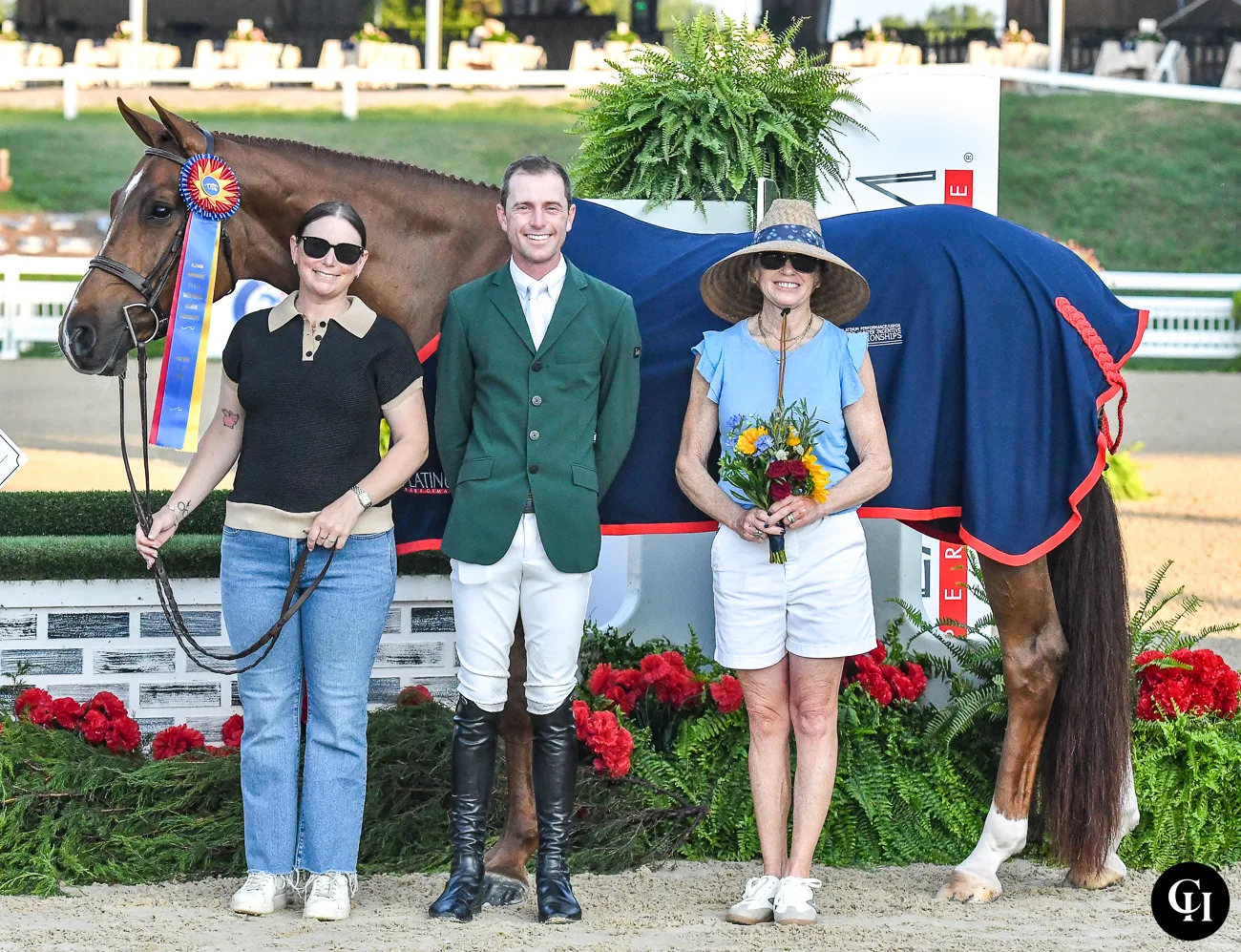
All that aside, Metzger knew she couldn’t do either of her two horses justice, and she watched their rounds from the in-gate as Jacob Pope and Nicolas Pongracz took over the rides in Lexington, Kentucky. It was difficult for Metzger, knowing that while the roots of her depression and anxiety transcended pressures of the elite horse world, her drive to be successful in the industry exacerbated her problems.
“You’re balancing so many emotions at once,” said Metzger who works alongside Laurie Jueneman at Snowfield Farm Inc. in Parker, Colorado. “You’re dealing with horses. You’re dealing with owners. You’re dealing with [business] partners. You’re dealing with yourself. You’re balancing so many people’s expectations at the same time, and I think that that’s an added element of what we do.”
And when Metzger finally got the courage to be candid about her struggles, she received a wave of support from the community beyond what she had expected.
Finding Her Happy Place
After aging out of her junior years, Metzger worked for Sue Lightner for seven years. Like many young professionals, she worked hard and was dedicated to the horses, eager to gain knowledge and experience and take advantage of opportunities to work with extraordinary horsemen.
“I did the whole work 14- to 16-hour days, and ride 12 to 15 horses a day, and teach lessons, and manage the barn [thing],” she said. “I mean, people make everybody believe that that is part of how you become successful in this industry, right? That you only become successful by completely sacrificing yourself for the sake of the sport. And I feel like that’s just what is expected of people to be good at this, and I would never take it back. I mean, I gained an immense amount of experience and opportunities. I really believe that Sue is who shaped me as a rider and a professional, and everything that she taught me is what has allowed me to do what I do today. But I really, at that job, put every feeling—emotion, exhaustion—I put it to the side, and I made myself grind.”
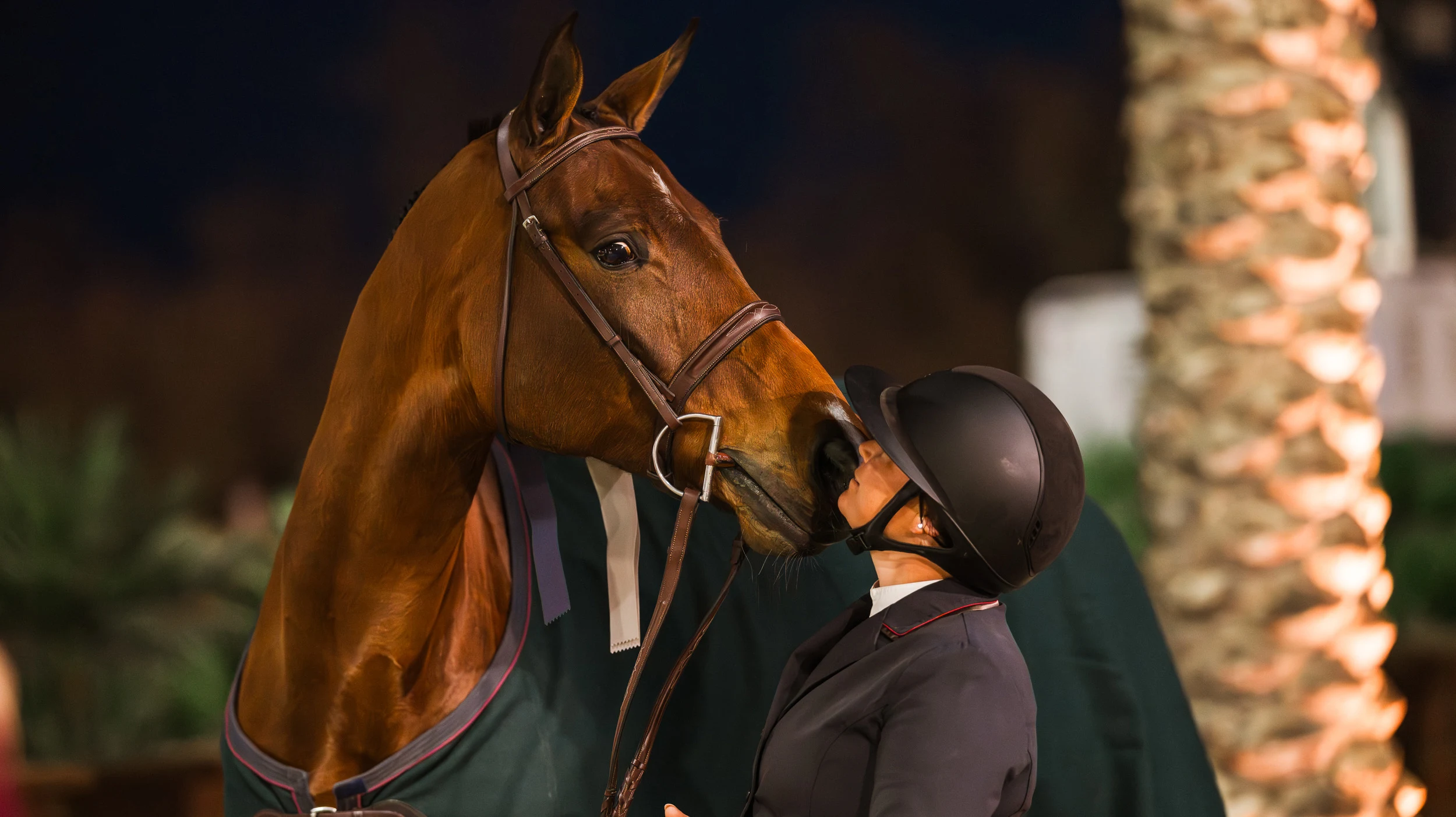
She did a stint barn managing and riding for Havens Schatt, an experience she described as “invaluable,” before heading to Northern California to work as a rider. She worked for a couple different barns but never quite found her niche. She was looking for something more stable, and she interviewed with Jueneman to manage the Interscholastic Equestrian Association team and the lesson program. That morphed into her current position as a rider and integral part of the show team at Snowfield Farm.
“I really came into a situation with her where I can combine everything that I’ve learned from everybody that I worked for prior to this, and I feel like Laurie and I have such an amazing situation here together in terms of our clientele and our horses and our goals,” said Metzger.
For Metzger, despite feeling at home at Snowfield and surrounded by people she liked, the anxiety and depression still crept back in. In the past when she felt those feelings, she could chalk it up, at least in part, to needing a change of scenery, or wanting to experience a different part of the industry. This time she felt stable in her life, but not in her brain.
“I love my job,” she said. “I bought a house in August. I love the people that I work with. I don’t want anything to change. So how do I get through this without changing my circumstances and my surroundings?
“That has led to a bigger understanding for me, that mental health is real in our industry,” she continued. “How do you find your way through mental health struggles within your happy place? I’m in my happy place, but I’m not happy. How do you navigate that?”
Pouring Gasoline On A Fire
At the start of 2025, Metzger was struggling, but she was managing. Then in April, her father, Robert Metzger, died. She described that like “pouring gasoline on the fire” of her depression. She was also devastated when two special horses in the barn got hurt.
“I’ve had some other things happen in my life, and then my dad died and it was like—kaboom—and all the sudden the grief and struggle with processing the loss of my father amplified all the other challenges I was having,” she said.
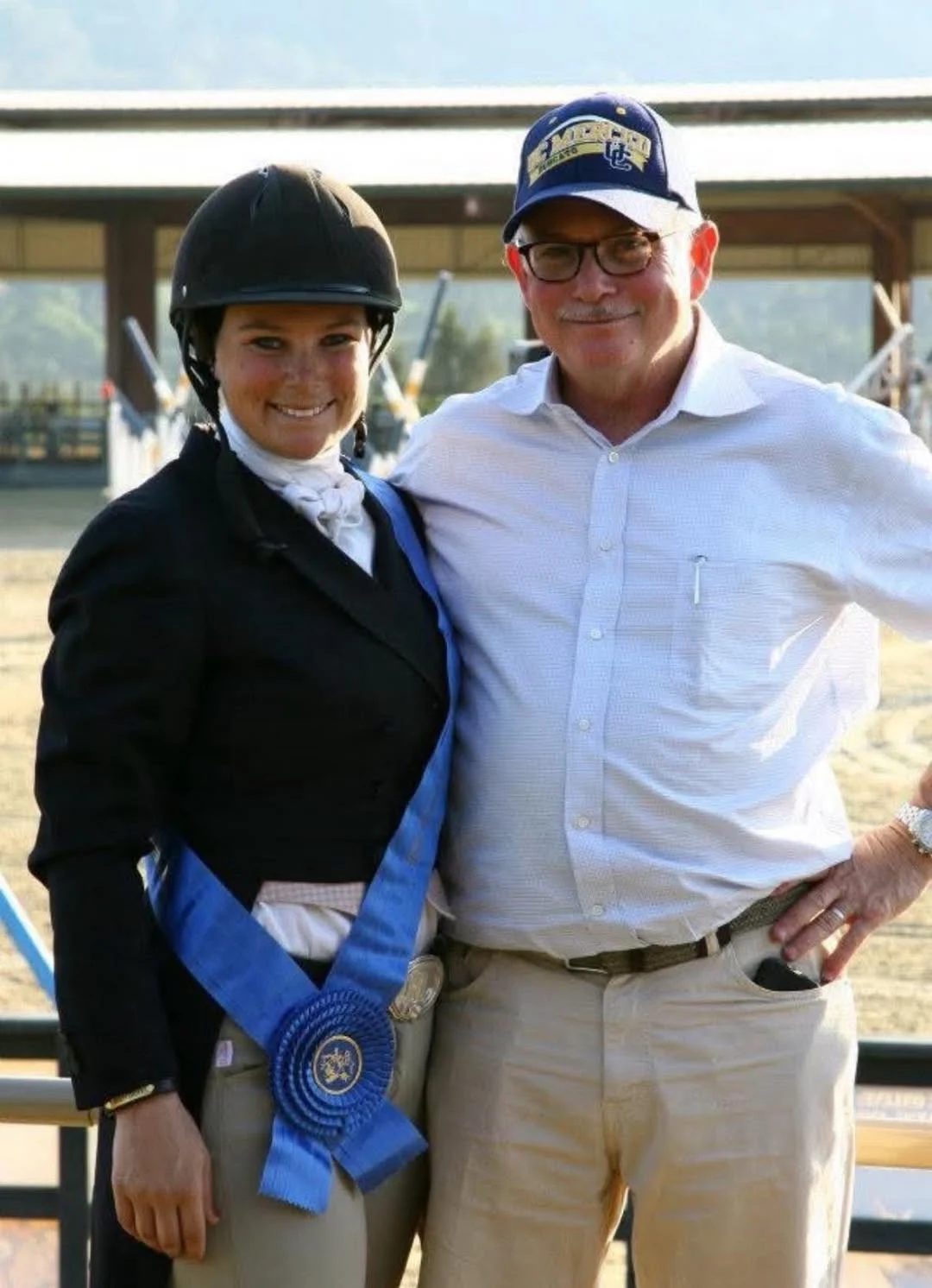
Things continued slipping downhill this summer. Toward the end of a six-week circuit with 30 horses at the Colorado Horse Park’s summer series, she went to her father’s memorial. She showed Wednesday and Thursday, flew to San Francisco that night for a Friday memorial, and after the memorial she tried a horse for a client and flew back, fully intending on showing the next day.
But she couldn’t get out of bed. The Snowfield staff and clients were very compassionate, and she forced herself to go to the show on Sunday to help from the ground.
“That was probably when I was like, ‘OK, I’m having a hard time,’ ” she said.
Making An Impact
The Snowfield team brought a smaller group of horses to the Traverse City, Michigan, and Lexington, Kentucky, circuits after that, which Marisa thought would help. But instead she found herself with more time to ruminate. It came to a head when she had a panic attack while showing a horse. It wasn’t her first panic attack—she’d had a few since several horses she was on tripped badly in a series of bizarre incidents, bringing her mortality into focus in her mind—but this one came at a bad time.
“That was when I was like, ‘OK, I have to take a step back.’ So we made the conscious decision to have Nick Pongracz ride [Holiday, owned Jennifer Edgell, Jueneman and Metzner] in Kentucky, because I didn’t feel like I could give that customer and that horse what it needed from me.
“People in their kindness were like, ‘You’re going to do such a good job. The horses jump beautifully for you. They know you,’ ” she added. “They were trying to help, but it only made me feel like there were more people relying on me.”
“It’s a lot easier for people to understand that you need to step back when there’s a physical ailment.”
-Marisa Metzger
Even riding Kessina, the horse she owns with Jueneman, felt impossible. There were no owners she had to impress, and Jueneman was very supportive, but that didn’t make it easier. It took a little longer for her to make the decision, but in the end she told Jueneman she couldn’t show him in the USHJA 3’/3’3” Green Incentive Championship, and they arranged for Pope to take over the ride.
“[I told Jueneman], ‘Let me break down where I’m struggling. I really believe in this horse so immensely, and I can’t imagine letting her down. I can’t imagine letting myself down. I can’t imagine letting you down. I feel like I’m setting myself up to fail,’ ” she said.
At first Marisa came up with excuses why she wasn’t riding.
“Those things were true, but everybody just assumes that when you say that you mean you have the flu, right? You broke a bone, or you got hurt, or whatever. It’s a lot easier for people to understand when you need to take a step back when there’s a physical ailment,” she said.
That’s when Marisa decided to come clean about her struggles with her mental health and how that prompted her to take a break by making a vulnerable post on Facebook.
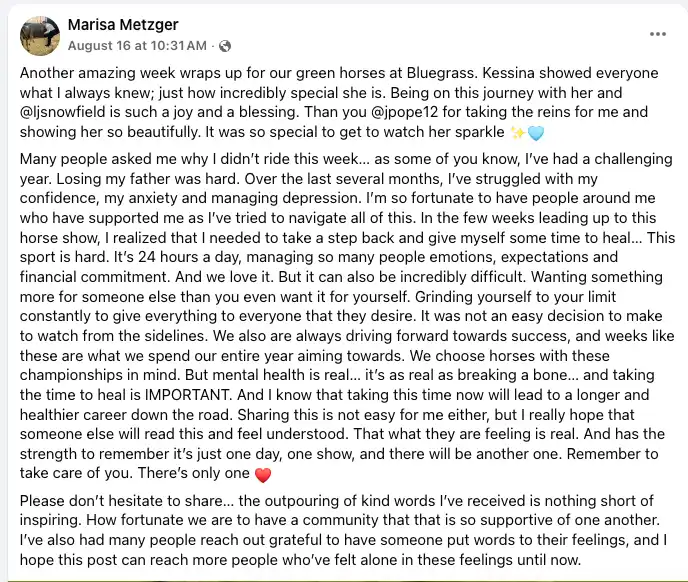
The post reads in part:
“Many people asked me why I didn’t ride this week… as some of you know, I’ve had a challenging year. Losing my father was hard. Over the last several months, I’ve struggled with my confidence, my anxiety and managing depression. I’m so fortunate to have people around me who have supported me as I’ve tried to navigate all of this. In the few weeks leading up to this horse show, I realized that I needed to take a step back and give myself some time to heal… This sport is hard. It’s 24 hours a day, managing so many people emotions, expectations and financial commitment. And we love it. But it can also be incredibly difficult. Wanting something more for someone else than you even want it for yourself. Grinding yourself to your limit constantly to give everything to everyone that they desire. It was not an easy decision to make to watch from the sidelines. We also are always driving forward towards success, and weeks like these are what we spend our entire year aiming towards. We choose horses with these championships in mind. But mental health is real… it’s as real as breaking a bone… and taking the time to heal is IMPORTANT. And I know that taking this time now will lead to a longer and healthier career down the road. Sharing this is not easy for me either, but I really hope that someone else will read this and feel understood. That what they are feeling is real. And has the strength to remember it’s just one day, one show, and there will be another one. Remember to take care of you. There’s only one.”
The response was immediate. Marisa was flooded with private messages and texts of people offering support, empathizing with her and sharing their own struggles.
“I’m really amazed by the response to the post. I definitely have had thoughts to myself like, ‘I wish more professionals would talk about this, professional to professional, because I would love to know how other people handle it, how they deal with their own nerves and anxiety, and balancing the clients and their expectations,’ ” she said. “But people don’t really want to talk about it.”
Marisa also received many messages from parents of juniors and amateurs. That was when she realized this was something that she and others in the horse world need to talk about more.
Finding Help
Marisa has been working with sports psychologists for the past four years.
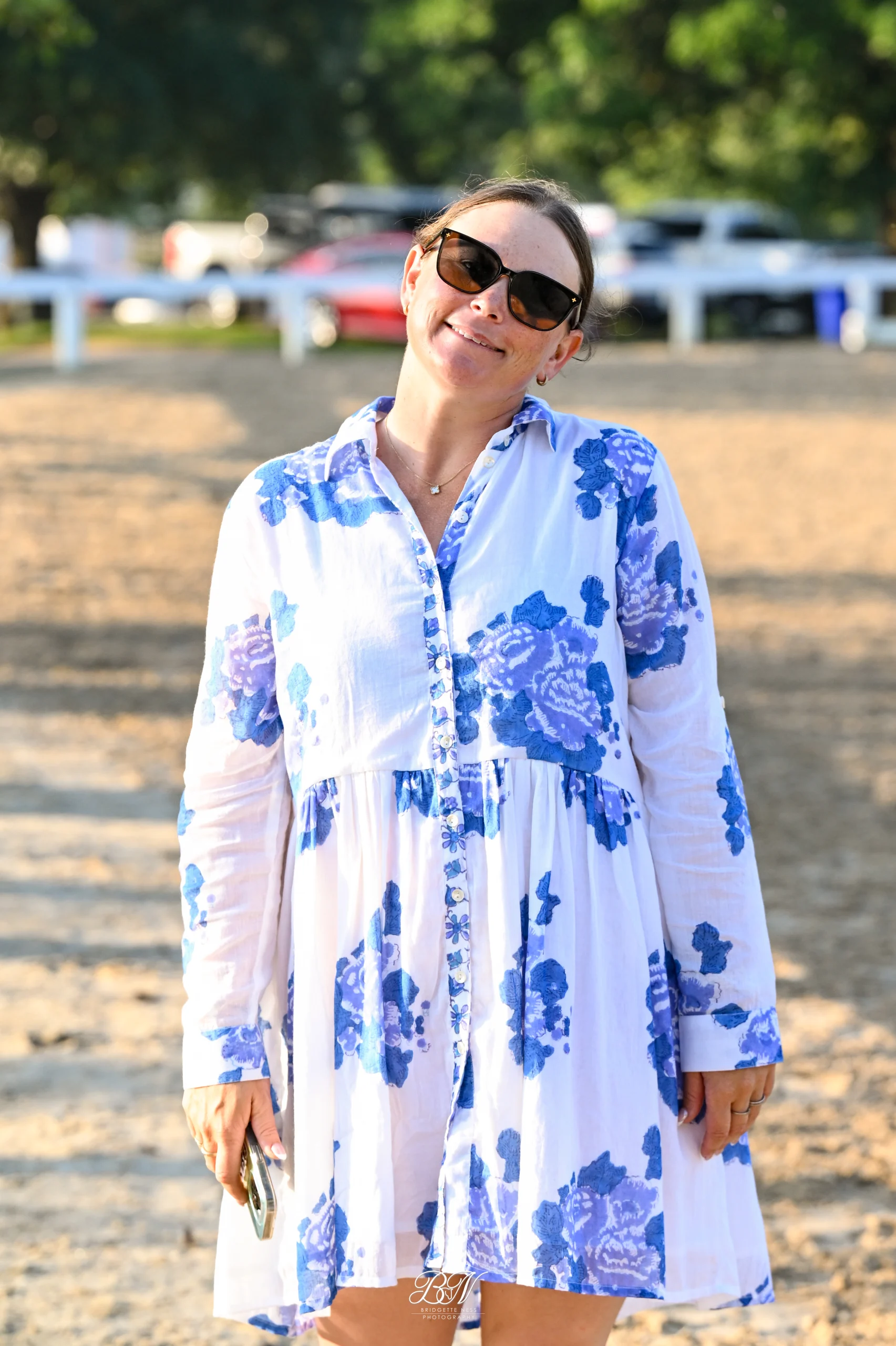
“I’ve worked with four different people,” she said. “You have to find the right person for you. There are different approaches to sport psychology, and if someone isn’t working for you, or you don’t feel like it’s hitting on the root of your challenge, look for someone else. I did not do that at first. I was like, ‘I’m the problem. They’re good at their job.’
“I’ve also recognized and I’ve learned the value of medicine, and that some of this is chemical, and it’s bigger than you,” she continued. “You want to feel better, but you can’t. There are people in the world who do not deal with anxiety and depression, and they don’t understand not because they don’t want to—there can be really sympathetic people out there—but they don’t get it because they don’t experience it. And there’s definitely a stigma around it. There’s also an opinion within our industry that you have to learn how to be strong. You can’t have emotion. I agree that you can’t be emotional in riding, but you can have emotion.”
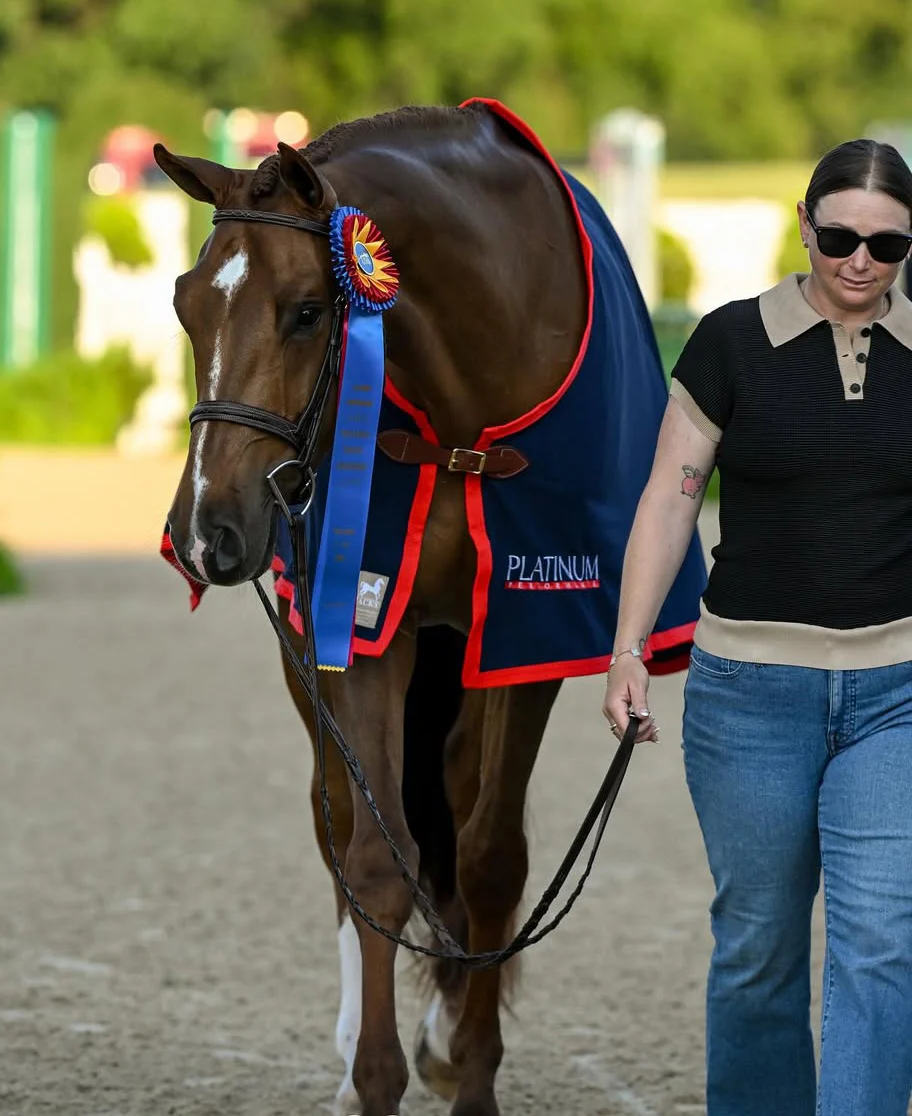
Marissa also works with a regular psychologist and has leaned into some more progressive treatments like stellate ganglion block injections.
“They block the nerve cluster in the base of your neck, to help reduce fight or flight reflexes,” she said of the treatment.
Despite her talk therapy, anti-anxiety medications and medical interventions, her symptoms persisted, prompting her break. Getting treatment is a huge time and financial commitment—she pays for most treatments out of pocket—but Marisa is willing to do whatever it takes to feel better.
Marisa pointed to the epidemic of horsemen who don’t care for their physical or their mental health, some of whom turn to drugs or alcohol or other unhealthy practices to cope.
“I grew up a bit still in that period of time when tears were not acceptable, and if you weren’t physically hurt, you’re not hurt at all,” she said. “And you know, I saw a meme on the internet the other day in reference to Tori Colvin and what she did at derby finals [riding her top horse to the win after taking a tough fall]. The meme said, ‘Hospital or [get back on the] horse.’ I was like ‘No, no.’ What Tori did was super human, but truthfully that is even more of an example of mental fortitude. She had such immense clarity of mind that she could mentally be strong enough to do that. When I saw that [meme] I was like, ‘Are you kidding me? Let’s get over the Dark Ages.’ ”
“I grew up a bit still in that period of time when tears were not acceptable, and if you weren’t physically hurt, you’re not hurt at all.”
Marisa Metzger
For the time being she’s cut her work schedule back to three days a week in an attempt to address her mental health—a luxury she knows the overwhelming majority of people in the horse world don’t have. She’s focusing on things that bring her joy, both within and outside the horse world, like working with young horses, cooking and home improvement projects. She feels blessed that she loves her job and has a supportive business partner in Jueneman, and that she’s independently financially secure.
Marisa is optimistic about seeing change in the horse industry around issues of mental health. She pointed to Equestrians for Mental Health Awareness, a California group that seeks to make a positive impact around equestrians and mental health challenges, as an example of a group helping those in the sport.
“There are people who are in our industry that are barn managers, braiders, assistants, grooms, who aren’t in the ring, and so people are like, ‘You don’t need sports psychology.’ But you need a different kind of support, but you also need support or somebody who understands our industry and the demands of our industry, because if you go talk to some regular doctor on Zoom, a lot of them don’t understand where you’re coming from,” she said.
“I had to hit almost a breaking point [to take a break],” she added. “You don’t want to have to get to the end of your rope before you take a deep breath and figure out what needs to change. And a lot of people’s ‘end of their rope’ looks different.”
The post Breaking The Silence: Marisa Metzger Brings Mental Health To The Forefront Of Equestrian Sport appeared first on The Chronicle of the Horse.
]]>The post Flora Baptiston’s Course Decorations Add Color To The Canvas appeared first on The Chronicle of the Horse.
]]>“He said, ‘I’m pretty sure that they could use some help with decoration and landscaping,’ ” Baptiston remembered.
“ ‘You are an architect; you do landscaping. Why don’t you send them an email and volunteer yourself for that?’ ” Baptiston, who grew up in São Paulo, sent the email, and after hearing back that her help was welcome, she booked her own airfare and hotel, excited to have an international competition experience. “For me, it was just [about] absorbing something new,” she said.
So when she arrived at the venue and introduced herself to the ground crew to ask who she would be assisting, she was shocked by their reply.

“They said, ‘You’re not assisting anybody. Here: Your guys are on the trailers, and I’ll show you where your plants are,’ ” she said.
Accustomed to planning every detail of her creative projects, Baptiston had to improvise, learning the specialty on the spot. But by the end of the competition, she’d been asked to help with decorations on the Florida circuit for the upcoming season. Within a few years, Baptiston’s skills would take her all the way to the equestrian sports at the 2008 Olympic Games, held in Hong Kong. Her trial-by-fire in course decorating marked the start of a lasting career.
In the decades since, the veteran course decorator has leaned into her creativity and architecture education, playing with the blank canvases of jumper and hunter courses.
Baptiston likes the challenge that each venue presents, where designers ask her to give a jump a certain personality or purpose within the context of the course. She’s had requests to create everything from sparse styles that incorporate concrete, to greens so lush “you feel like you’re in the jungle.”
For jumpers, she’s often asked to add elements that make a fence more challenging. For hunter courses, her work is to bring in natural, inviting elements that echo the sport’s roots in foxhunting.
“My projects normally start on paper, the same as when I’m designing a house. You plan ahead; you have a conversation with your client, and you know what they need,” Baptiston said. “My clients—or in my case, the course designer—explain: ‘I don’t want the turn here.’ ‘I want this to be inviting.’ ‘Can you extend this down the side of this jump?’ ‘Can we just tuck it in a little bit?’
“You need to make it inviting for the horses and pleasant to the eyes for people,” she continued. “So we are trying to comply with both. That’s the beauty of it.”
In addition to the design challenges, Baptiston also comes up against logistics specific to each competition, whether that’s tracking down plants that can survive desert heat or overnight temperature drops, being resourceful on a tight budget, or navigating a language barrier with local vendors—as in Hong Kong, where Baptiston remembers communicating with nursery owners through photos.
Baptiston, who now lives in Querétaro, Mexico, has traveled the globe in her capacity as an FEI judge. But even when she’s on show grounds as an official, she can’t quit thinking about flowers, colors and design. She uses these travel opportunities to absorb the world around her.
“Every year, they give us an appointment as a foreign judge; at all the international shows, one of the judges needs to be foreign,” she said. “It’s good, too, because it gives me the chance to see different things, different environments. I like to see different things and see how I can apply them to the special events that I go to decorate.”
In a collaboration much less spontaneous than her initiation into course decoration, Baptiston teamed up with hunter course designer Kevin Holowack to outfit the ring at the Baran Global Hunter Classic, held in Valkenswaard, the Netherlands, July 11-13.
“Flora is quite famous in the industry,” Holowack said. “I think that as the horse industry knows riders, officials know Flora.”
He says that part of the reason the duo works so well together—in addition to their shared backgrounds in architecture—is that they are equally committed to bringing their plan into reality.
“I’m usually the last one in the ring fluffing a fern or moving a red flower because it’s not in the right place,” Holowack said. “And when you look across the ring, and Flora is still there doing that same thing, you realize, OK, you have someone that has that same vision and will work to the end.
“It truly is a passion, and I think Flora is that same way,” he continued. “That finished look is something that you step back, and you’re proud of. You look at the ring that day, and you say, ‘This was a vision that came together.’ Plus or minus maybe one flower, this was the look that we were going for.”
At the Baran Hunter Classic, which was held alongside the Longines Tops International Arena Summer Classic CSI4*, the duo planned a course aesthetic inspired by the country’s trademark tulip.
“It’s almost minimalist,” Baptiston said of the design concept. “You work with the beauty of the tulip, and that [was] the look that we were aiming for.”
Behind the scenes, Holowack worked with Baran co-founders Kristen Baran and Andrew Lustig to land on the project’s overall style. He then sent over the blueprint for the jumps and course to Baptiston, and together they collaborated on details around color, vegetation and materials. At the event, Chris Boyle also joined the design team on the ground to assist Holowack and Baptiston in building out the course and finalizing decorations.

What comes together in the arena for one day takes months of preparation behind the scenes, which for the Baran included sourcing live and silk plants, importing custom jumps from different makers around the world, and working with the jumper course designer to create dual-purpose elements that could be turned over quickly for the hunters.
“We pulled pieces from all over the world too, and pieces that we [thought] would go nice together,” Holowack said.
In Baptiston, Holowack says he’s found another creative who can see stripped-down elements—like a forgotten bench or gazebo on the backend of a showgrounds—and incorporate that inspiration into the final look.
No matter the venue, the weather or the budget, there’s always one part of the decorating process that is hardest for Baptiston: walking away. With her careful attention to detail, she can always find one more thing to do before the first round begins.
“I’m a perfectionist,” she said. “Sometimes, I need to just turn around and say, ‘It’s good the way it is.’ ”
This article originally appeared in the August 2025 issue of The Chronicle of the Horse. You can subscribe and get online access to a digital version and then enjoy a year of The Chronicle of the Horse. If you’re just following COTH online, you’re missing so much great unique content. Each print issue of the Chronicle is full of in-depth competition news, fascinating features, probing looks at issues within the sports of hunter/jumper, eventing and dressage, and stunning photography.
The post Flora Baptiston’s Course Decorations Add Color To The Canvas appeared first on The Chronicle of the Horse.
]]>The post Wellington International Announces Facility Improvements, Prize Money Upgrades appeared first on The Chronicle of the Horse.
]]>“The Wellington International team, with incredible support from Wellington Lifestyle Partners, has been working hard to take the Winter Equestrian and Global Dressage Festivals to the next level,” wrote Kessler in the update.
“I promised you that each year we would get better. I think we all agree that 2025 was better than 2024, and we are making sure 2026 is even more impressive with major improvements in sport, infrastructure, and hospitality.”
Prize money upgrades include making the Rolex US Equestrian Open CSI5* Grand Prix a $1 million class in 2026, as well increasing prize money for all CSI4* grand prix qualifiers from $62,500 to $116,100 and all 1.25-meter or higher junior and amateur jumper classics from $10,000 to $15,000.
The Adequan Global Dressage Festival show schedule will include three FEI World Cup Qualifiers during the series, which takes place Jan. 7-March 29. The Winter Equestrian Festival, which takes place Dec. 31-March 29, will host 68 FEI jumping world-ranking classes, with FEI winning round qualifiers updated to a two-round format with faults carried forward.

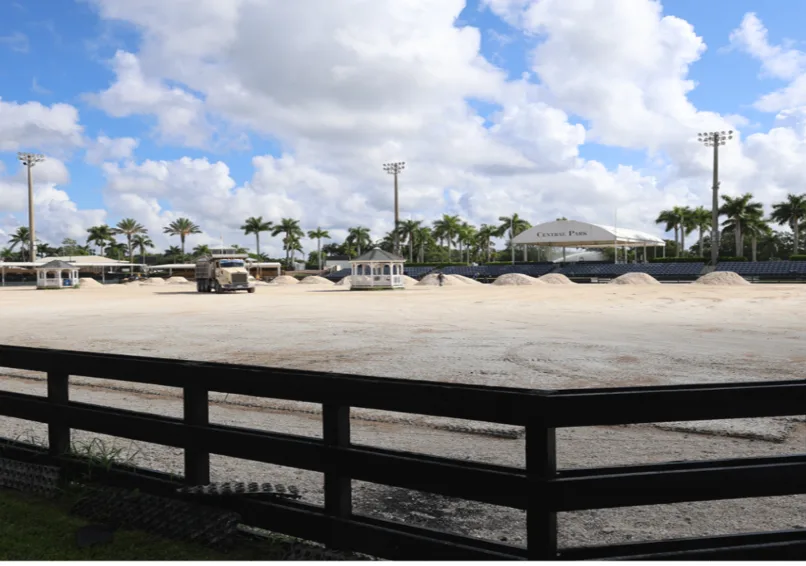
Facility improvements announced at Wellington International include:
- Renovated FEI stabling with new Barnwalkers Pro-Series Stalls and Equitan rubber for equine safety and comfort.
- Arena improvements including GGT textile footing installed in the International Arena and international schooling area, renovations to the Grand Hunter Ring and new footing and drainage in the Pony Island rings and main longeing area by Barn 2.
- Expanded golf cart paths, improved parking and roads between barns to reduce dust and improve travel within the show grounds.
- New bathrooms, plus refurbished wash stalls and manure bins.
Facility improvements at Equestrian Village include:
- Covered spectator stands.
- Redesigned judges’ booths to minimize obstructed views.
Construction updates for Wellington International’s expansion:
- The three rings completed last year will be supplemented by one additional new ring. All four will be available for exercise during the 2026 WEF season.
- The grass derby field has been completed and will be growing a solid root base for use in the 2027 season.
- A new 205-by-420′ covered arena is being constructed.
- Roadwork is underway to improve traffic flow to the venue.
For more information on upgrades planned for 2026, visit Wellington International.
[WI FL Acquisition LLC, which owns Wellington International, also owns The Chronicle of the Horse.]
The post Wellington International Announces Facility Improvements, Prize Money Upgrades appeared first on The Chronicle of the Horse.
]]>The post Opinion: We Can Remedy The Scourge Of Overuse In Horse Showing appeared first on The Chronicle of the Horse.
]]>Unfortunately, the town hall failed to address one of the most significant root problems of horse abuse: the overuse of horses in jumping-based competition for economic and personal gain.
Most USEF stakeholders have a conflict of interest in this discussion: The more that horses compete in USEF competitions, the more money is made by competition managers, trainers, riders, owners, veterinarians and USEF. Each entity benefits economically from horses being shown more, so there is an inherent bias in avoiding a solution to the overuse problem.
Too Many Competitions, Too Many Classes
USEF rules do not restrict the number of classes that a hunter/jumper horse can compete in per day, week, or month. The recently updated GR Subchapter 8-F Welfare of the Horse—specifically GR838.1—addresses overuse and unethical treatment of horses. But without an objective way to assess what constitutes overuse, it is a meaningless rule subject to varying interpretation. The matter is only really brought to the fore after a horse is injured. USEF maintains a record of every rated class a horse contests, so competition frequency can easily be monitored.
A 2023 USHJA rule change proposal attempted to cap the number of over fences classes horses could participate in at eight per day, a shockingly high number. However, due to challenges in execution and broad disagreement on what the limit should be—including whether it should vary based on fence height, class type or competition format—even that proposal was ultimately withdrawn following extensive debate at the USHJA Annual Meeting. It’s not surprising the proposal was deep-sixed, but it is now high time for USEF to enforce meaningful limits on the number of classes in which horses can compete on a daily and monthly basis.

The economics of the sport make addressing competition overuse challenging, because it is not in the interest of many of the parties involved to introduce class limits. Show managers make more money on entry fees with each class a horse enters, so it’s hard to see them supporting class limits.
Trainers make more money with each show a horse attends and each day a horse shows, so one can’t expect them to support class limitations. (Plus, when a horse becomes injured, the trainer’s quest to buy a replacement often begins, once again to their economic benefit.)
Veterinarians are also complicit in competition overuse because of the immense pressure they face to get horses back in the ring. Owners often prefer not to hear that their horse needs a few months off when an injection or other treatment can get them back competing more quickly. A veterinarian is somewhat beholden to the owner’s demands to achieve results fast. If a veterinarian is reluctant to treat the horse aggressively, the owner may well find another veterinarian who will. One cannot, therefore, expect veterinarians to support class limitations readily.
There is no union for horses, but there are examples of fair horse usage rules already in place, including New York City carriage horses, who are not permitted to work for more than nine hours in any 24-hour period (including waiting time). At U.S. Dressage Federation-recognized competitions, governed by USEF rules, horses are limited to a maximum of three classes per day from intro through fourth level and a maximum of two classes a day at Prix St. Georges level and above. Pressure to overuse horses is a recognized problem for which some practical solutions have already been found, including by USEF in certain disciplines.
Like other professional sports, there is generally no longer an off-season for horses. National and international competitions are held year-round, unlike in the past when the show season wound down after Toronto’s Royal Horse Show in November and restarted in Florida in February. During the winter, one- and two-day schooling shows were the only things on the calendar. Now, there are high-level shows all year. Keeping a horse out of the ring or resting it for a few months is hard when there are multiple pressures to show. Yet that is exactly what needs to happen.
Supply-side economics predicts that the greater the quantity of classes available, the more classes horses will compete in. In addition, the more shows a horse competes in, the more competition fees USEF receives. USEF year-end awards also create pressure to overuse horses in competition. More placings mean more year-end points. The Fédération Equestre Internationale ranking list further exacerbates horse overuse because riders must constantly compete to stay high enough in the rankings to qualify for the most prestigious events. Even for our top riders, the pressure to stay in the ring is immense.
For those fortunate riders who have multiple horses, overuse is less of an issue because they can rotate their horses among shows. But for most others, there is a necessary tension between what is right for the horse and what the rider—who needs to gain experience, win year-end points, and/or maintain a ranking list position—wants.
Fair Treatment, Fair Maximums
However, horses have limited life spans. The length of a horse’s competitive career depends not only on its physical conformation, but even more on the quality of its management throughout its active years. Overuse is a significant cause of injury that curtails many equine athletes’ careers. The show environment is challenging—both physically and mentally—and simply getting to competitions can also include long journeys for our equine friends.
Clearly, there should be some limit on the number of competitive rounds a horse is allowed to do; it is both ethical and responsible. But how might that work? There are ways that USEF can encourage sensible and reasonable limitations on equine competitive stressors. Developing a rule that accommodates the need to show while capping the number of classes the horse competes in would address the issue.
Most USEF stakeholders have a conflict of interest in this discussion: The more that horses compete in USEF competitions, the more money is made by competition managers, trainers, riders, owners, veterinarians and USEF.
When the USHJA withdrew the class-capping rule in 2023, one sticking point cited was that because entries are submitted in advance, some horses are entered in more classes than they will actually contest and then scratched from some closer to show day. However, USEF tracks entrances into the ring and the subsequent results, which eliminates confusion on this issue.
At a minimum, USEF could discourage overuse by tracking the daily number of classes and monthly number of shows a horse contests. It could decide that points gained outside of reasonable use parameters would not count toward year-end or ranking points, or combinations could be ineligible for prize money. It could notified owners if their horse exceeds fair use limits.
Obvious overuse is currently prohibited by USEF regulations under cruelty and abuse prohibitions, but enforcement is on a case-by-case, subjective basis and is after the fact, which is unfortunate for the horse involved. Encouraging appropriate use with these measures strikes a decent balance but remains a retroactive solution.
Class Limits Are The Way Forward
If we really want to tackle the overuse issue, class maximums are the way forward. So, how might this work? A greater number of classes would reasonably be permitted at the lower levels; for example, a pony competing in hunter and equitation classes can comfortably contest more classes per day than a grand prix jumper. A basic formula could be introduced to govern the various jumping levels, with varying limits on permitted class numbers.
Reasonable maximums for the following could be codified as follows:
- Number of shows in a month
- Number of consecutive days of showing
- Number of classes per day based on course height
For example, a general restriction of three shows per month could be implemented, with a maximum of three consecutive days of showing permitted, and—dependent on fence height—a maximum number of jumping classes per horse per day:
- Course above 1.30 meters: Two classes
- Course 1.20 to 1.30 meters: Three classes
- Course below 1.20 meters: Four classes
These are not draconian limitations; they would still allow horses to compete in a generous monthly maximum of 24, 36, or 48 classes, depending on the level. We could also hammer out a fair formula for horses competing across the different levels. While there is room for debate, the principle is simple: we can’t keep pounding our horses into the ground.
It’s high time we challenged ourselves to ensure horse welfare is safeguarded from all angles. Even if instances of overuse are few, for affected horses, it is unacceptable. We all have differing experiences, so active participation in USEF’s town hall meetings is essential to gain perspective and opinions from peers. Limitations on competitive rounds may provoke some pushback, but it moves the welfare dial in the right direction. Horses are not bicycles whose parts can be replaced if worn out or broken. They deserve to have meaningful protections against overuse, and USEF is best positioned to spearhead this progressive step.
Armand Leone of Leone Equestrian Law LLC is a business professional with expertise in health care, equestrian sports and law. An equestrian athlete dedicated to fair play, safe sport and clean competition, Leone served as a director on the board of the U.S. Equestrian Federation and was USEF vice president of international high-performance programs for many years. He served on the USEF and U.S. Hunter Jumper Association special task forces on governance, safety, drugs and medications, trainer certification, and coach selection.
Leone is co-owner at his family’s Ri-Arm Farm in Oakland, New Jersey, where he still rides and trains. He competed in FEI World Cup Finals and Nations Cups. He is a graduate of the Columbia Business School in New York and the Columbia School of Law. He received his M.D. from New York Medical College and his B.A. from the University of Virginia.
Leone Equestrian Law LLC provides legal services and consultation for equestrian professionals. For more information, visit equestriancounsel.com or follow them on Facebook at facebook.com/leoneequestrianlaw.
The views expressed in opinion pieces are those of the writers and do not necessarily reflect those of The Chronicle of the Horse.
The post Opinion: We Can Remedy The Scourge Of Overuse In Horse Showing appeared first on The Chronicle of the Horse.
]]>The post Does The New USEF Position Statement On Horse Overuse Go Far Enough? appeared first on The Chronicle of the Horse.
]]>The court had the difficult task of trying to precisely define obscenity, and why the film did or didn’t meet that description. But rather than trying to construct a strict definition of obscenity, Justice Potter Stewart famously and simply said: “I know it when I see it.”
The stakes aren’t constitutional—and the proposed definitions won’t make one blush—but the long-running discussion over whether the U.S. Equestrian Federation should establish a rule limiting the number of classes a horse can do at a single hunter/jumper show comes down to a similar assertion. In this case, however, “I know it when I see it” refers to horsemanship—or the lack thereof.
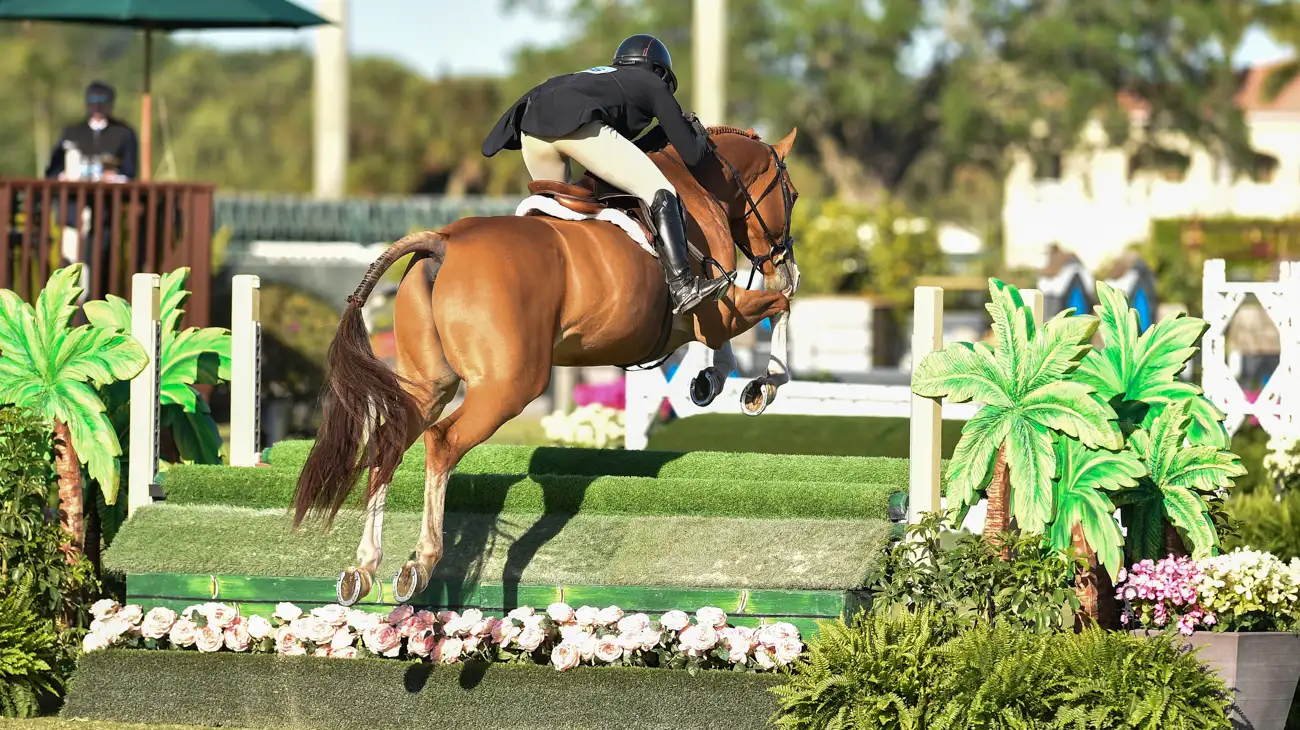
The challenge has always been in setting a specific number of classes, especially considering the huge range of factors that determine whether a horse or pony’s show schedule is “too much.” What might be exhausting for a thick-bodied warmblood might not even faze a Thoroughbred. Should the limit be the same at 2’3” as it is at 3’6”? Does a class limit just mean that a horse will be longed for an hour to get it quiet, and does that defeat the purpose?
The topic has often come up at U.S. Hunter Jumper Association town halls and other discussions of horse welfare, where everyone seems to agree there are a very small number of problem competitors and many people urging governing bodies to protect both the horses and the sport in this age of heightened attention to welfare issues.
At USEF’s mid-year board meeting in June, the board of directors approved several extraordinary rule changes related to horse welfare, including the implementation of hair testing and stricter rules regarding a horse returning to competition after a collapse. The board also adopted position statements on horse welfare and overuse.
The overuse position statement reads in part:
“Indicators of overuse include a decline in performance, physical capabilities, movement, and/or mental well-being. Observable signs may involve physical signs of discomfort, exhaustion, lameness, changes in stride, resistance to move forward, use of both leads, and deterioration of jumping style. This is not an exhaustive list of symptoms or combinations thereof and it is imperative that officials use their experience, horsemanship skills, and equine knowledge to make an informed, non-biased decision regarding the horse or pony’s health, safety, or well-being.”
The position statement isn’t a rule and doesn’t set any numerical class limits, but it does put into black and white the federation’s support for officials who feel horses are being overused and want to step in. Essentially, it backs them up when they say, “I know a lack of horsemanship when I see it.”
Input From Veterinarians
In March, USEF held a veterinary summit in Ocala, Florida, attended by about 30 veterinarians from around the world, USEF CEO Bill Moroney said.
“[Overuse] was one of the topics that came up there,” he said. “And at the end of the day, everybody realized: Setting a number is not the easiest thing to do in the world. It’s pretty challenging, right? Because horses, like people, are all different,” Moroney said. “It’s very individualized by horse and by breed or discipline as to what would constitute overuse.”
USEF put out a white paper from the veterinary summit summarizing the discussions. “It includes a section in it about overuse of horses and the challenges of just setting a defined limit of, let’s say, three classes a day or something like that, or per competition, and how that doesn’t really satisfy things,” Moroney explained. The position statement—which USEF collaborated closely with Equestrian Canada to write, Moroney said, noting that organization put out a similar statement—distilled the discussion from the summit into a checklist (albeit incomplete, he stressed) that officials and competitors alike could use.
“We wanted to give people an understanding of the signs of overuse: How do you know that a horse is in distress? What are the signs of that you’re seeing? Potentially an alteration of gait. You’re seeing a reduction in performance. You’re seeing signs of fatigue, etcetera, that are occurring,” he continued. “And that way, the entire community would have something to go to, to be able to understand better how to calculate and manage the use of the horse and ensuring that we’re not overusing them.”
“We wanted to give people an understanding of the signs of overuse: How do you know that a horse is in distress? What are the signs of that you’re seeing? … [T]hat way, the entire community would have something to go to, to be able to understand better how to calculate and manage the use of the horse and ensuring that we’re not overusing them.”
Bill Moroney, USEF CEO
Another important takeaway from the summit was the importance of frequent evaluations and conversations with a horse’s veterinarian, Moroney said.
“Part of the process is making sure that the horse is getting regularly attended to by a veterinarian at home, right?” he said. “[There should be conversation] between the vet and the trainer and the owner of the horse, so that everybody’s on the same page as to what that horse’s fitness level is, and how it is responding to the amount of of competitive experiences that that trainer and rider are utilizing the horse for, and just making sure its well-being comes first—and that has to include those regular veterinarian checks and those conversations between all of the parties to assess where that horse is at.”
Moroney said it’s important for competitors and trainers to educate themselves on the statement and discuss it with their veterinarians. “We have a very robust set of mechanisms to report situations where they feel a horse’s welfare is being compromised,” he said “I think it’s incumbent then on somebody who is at a competition to understand what they’re seeing and what they’re reporting on, and does it rise to that level. I also think it’s very important for people to share that statement with their vets so the vets know the conditions under which they’re showing and training and all of that, so that they can help them understand the nuances of seeing those signs [of overuse]. We can give them a statement, but I think their veterinarian, that’s the normal person caring for that horse on a regular basis, can help them understand the nuances.”
Moroney said the feedback from officials has been positive so far, and that USEF is working on support resources for officials to help them address concerns with competitors in productive ways.
“I think people always want something extremely definitive that you can have in black and white, and no shades of gray. And I think the hardest thing is officials are put into a position of having to make judgment calls, and we live in a world where there are a lot of challenges to any decision anyone makes, right? Which makes it very difficult,” he said. “But I think that’s why it’s so important to try to give them as much information and as much education [as possible] about how to deal with the situation.”
It Comes Down To Conditioning
USHJA President Britt McCormick said the organization was involved in discussions at USEF that led up to the publication of the position statement. He feels it strikes a healthy balance between acknowledging that some competitors may be asking horses to do too much while also giving officials the latitude to use their discretion rather than enforce an arbitrary number of classes. He emphasized that overuse has less to do with a number of classes than whether the horse has been appropriately legged up for that workload.
“If a horse is conditioned for the job it’s being asked to do in the field, it is almost impossible to overuse a hunter or a jumper,” McCormick said. “So when you take a look at the gamut of what horses do for a living—working ranch horses, endurance horses, even dressage horses, eventers—hunter/jumpers, on the use level, are way low. Most of them don’t even break a sweat. If they do, it’s short bursts, intermittent. A class lasts, you know, 90 seconds, maybe two minutes at most.”
When discussing the issue with those who have lobbied for USEF to set a numerical limit, McCormick said they usually offer about 12 classes per show as a logical cap.
“Let’s just play this out: So let’s say your typical 3’3” green has its secondary job as a children’s hunter or an adult hunter or whatever. So five classes plus two warm-ups, let’s just say for the green division, that takes place on a Wednesday and a Thursday. So that’s seven [classes],” he explained. “Then it maybe has a Friday derby day—that’s two trips—and let’s say it does the children’s hunters and equitation. So five more for the division, maybe two more warm-ups and five medals. You’re hovering around 22 classes over a five-day period, [about] four classes a day. It’s less than 30 minutes of work.”
Another theoretical example that is often offered is “school horses that go around 18 times over crossrails,” McCormick said.
“Again, if they’re conditioned for that job, I don’t have a problem with it. What I have a problem with is when somebody does one of two things: Either the horse is not conditioned for the job it’s being asked to do, [or] it’s stressed,” he said. “So, visible signs of stress, that’s no good. And I think that’s something that, if we’re in the field [at a competition], you walk up to those people and you say, ‘I’m sorry, your horse looks like it’s stressed. You need to get off and go put it up.’ That can be riding, that could be longeing, that could be sitting on it at an outdoor horse show for three or four hours, and it hasn’t done anything, but it’s never had a chance to get a drink of water. It’s never had a chance to go back in the stall and be by itself for a second. There are all different levels of stress; it’s not just classes.”
While the position statement encourages officials to use their discretion, the lack of a hard limit does allow leeway for competitors to dispute their assessment, McCormick acknowledged.
“I think the judges do [feel empowered to act] in the hunter world. And, I mean, I’m a judge, so I don’t mind saying it. I think most of us would go, ‘Hey, look, we don’t want to see that horse again because it looks fatigued,’ ” he said. “I think the stewards, obviously, they always feel better with some kind of a rule in place, but I think that the ones I’ve talked to feel better about making the call. And it’s not a punishment; I think everybody comes to it from an education standpoint. So the [statement] is made, I think, to be educational and give a little bit of bite if you need it.”
A Lack Of Education
Cricket Stone is a USEF C1 ‘R’ steward and sits on the USHJA board of directors. If she has concerns about a horse’s workload at a competition—usually brought to her attention by a judge—she said she approaches it with the goal of education, and brings the show veterinarian or another steward along when she voices her concerns.
“I just approach the trainer and say, ‘You know, part of my job is education. I am concerned that your horse has been entered in a number of classes today,’ ” she said, adding that time spent in warm-up and standing around at the ring factor in as well. “If it comes down to them getting a little belligerent, which sometimes they do, I usually have spoken with management about these things, and management will usually back me up, or back the vet or the judge up, and just say, ‘Hey, you know, this is something that we’re working on combating in our sport right now, is how we look to the public. It doesn’t mean that you don’t see it in a different light. However, to the uneducated eye, this is what is being seen, and this is not a good look for the sport right now.’ I always try to fall back on education before going to any kind of a warning card or something like that, because 99% of it is honestly lack of knowledge.”
She calls the position statement a good start but noted that it’s not going to solve a lack of knowledge among trainers.
“You can’t regulate horsemanship. People feel like we can regulate number of classes, number of jumps, things like that, but what you’re really trying to do is regulate horsemanship, and that’s an educational thing, not a regulation issue,” she said. “I learned from very, very good horsemen who taught me about horse welfare before everything else. That’s so important, because you cannot take a horse show career and turn into profession without the knowledge to back that up, and unfortunately, that’s what’s being done right now. We need to get back to educating. We need to get back to mentorships. We need to get back to internships, apprenticeships, whatever it takes, where people learn the basics of the career, which involves the care of the horse, the well-being of the horse, prior to showing.
“For right now, as a steward, I’m very appreciative of this statement, because it gives me, if nothing else, backup from USEF if I say something.”
Cricket Stone, USEF steward
“This will never happen, but I’m a huge proponent of some kind of certification or licensure for trainers, because right now, I mean, anybody can be a professional. They just check the box,” she continued. “There’s no regulations in place for that, which is what needs to happen in order to make the real change that we need to see in the business right now. So for right now, as a steward, I’m very appreciative of this statement, because it gives me, if nothing else, backup from USEF if I say something.”
Everything Comes Back To Horsemanship
Sue Lyman has operated West Riding, a training business near Middleburg, Virginia, for over 30 years. She’s also chair of the USHJA’s Horse And Rider Advocates Committee. She agrees with Stone that there’s a significant lack of education contributing to the issue, and has even advocated for a program similar to SafeSport that people would have to complete before they show, demonstrating knowledge of welfare rules, for example, or even just schooling ring etiquette and proper longeing techniques.
“The problem with education is people don’t really go out to get educated unless it’s going to benefit them,” she said. “So I think that people who are good trainers, who do this because they like horses, are aware of that issue, and we get frustrated that people … don’t learn and do the best thing for the horse. Because, I mean, that’s how we were brought up, and that’s why we do it.”
Lyman also thinks that writing a rule setting class limits would be difficult, but said she felt horse show officials were generally up to the task of policing overuse.
“I think that show managers and stewards are super helpful,” Lyman said, noting that she’d gone to show management about longeing issues in the past and found them to be proactive when an issue was brought to their attention.
“I think DiAnn Langer, in her article that she wrote [about speaking out against abuse], said people need to stand up for the horses. Like, why are we so afraid about what’s going to happen to us? Gosh, get a backbone. If you like horses, speak for horses, right?” she said. “I think if you are respectful, you know, definitely go to the stewards and go to show management, try it. You can’t write a rule for every single little thing of abuse; if you see something that’s abusive, then report it.”
Back in 2022, trainer Miranda Scott was so disturbed by incidences of overuse that she wrote a letter to the USHJA membership in In Stride magazine.
“ ‘A horse only has so many jumps in him,’ ” she wrote. “This is a statement I often heard from the great old horsemen who shared their wisdom with me as I was growing up.”
Scott, who taught at Meadowbrook Stables in Chevy Chase, Maryland, for 16 years and counts Kathy Kusner as one of her mentors, also sees a lack of horsemanship as a root cause.
“I really take horsemanship seriously. I see some of these young professionals don’t take care of the horses,” she said. “That’s why I wrote that article. So many of these younger professionals sort of go through horses, you know, and if that’s how your business model works, so that every time you break one, you gotta go buy a new one and can make that commission. It’s not about the longevity of the horse and the quality that the horse has so it can have a good retirement. I’ve just seen so many very bad horsemanship decisions, in very nice places.”
Scott said she’s skeptical of trying to set a limit on classes through a rule, since situations can be so variable. “I think creating a rule that people will abide to [is difficult], because even [though there’s] a rule on drugging, they still seem to be drugging ‘em!” she said.
“I wish we had the kind of integrity in our sport that people would just do the right thing to do the right thing instead of trying to cheat. There are always those cheaters. I would like to believe that there’s more people out there that are trying to do it right than wrong. But I think we have to talk about [horse welfare] and … [create] a positive, peer pressure to do right by the horse.”
Words Aren’t Enough
Jay Duke, a former professional hunter rider who is now a clinician and course designer based in Calgary, Alberta, has been advocating strongly for a rule with a limit on the number of classes. He’s also the founder of Safe Horse, a non-profit advocating for horse welfare and well-being in equestrian sport. He said he’d like to see USEF—and Equestrian Canada—do much more.
“It all sounds good, but it’s not actually helping the horses,” he said. “Something concrete needs to happen to make it better, because every single week all across the country, there are horses being shown in excess … not a lot of horses. It literally is like 4% or less, but it’s still happening to some horses, and the federations need to do something concrete to help these horses out. That’s No. 1. And No. 2 is they need to do something concrete to show the world that they care about the health of the horse and are vested in their interest in the horse, and instead of just saying fancy words and not actually doing anything.”
Like other members of the industry interviewed for this article, Duke pointed the finger squarely at a loss of horsemanship, saying simply: “There used to be better horse people. What’s happened? You know, the industry has gotten very large. There is no regulation on training and who can be a trainer,” he said. “There’s more and more horse shows, and there’s more and more disposable income for people to go through horses faster, and not as much need to keep horses sound and going for longer terms, because people can just buy another one. So without question, it’s become a bigger deal. It’s happening more often than it used to for all those reasons.”
Duke, who is on the USHJA Horse And Rider Advocates and Safety Committees and has been working with USEF and USHJA on the issue, said he agrees with McCormick that horse show officials should have the discretion to step in when they think they need to, but that there are complicating factors.
“No. 1 is the judges and the stewards are hired by the horse show management,” he said. “Horse shows are a pretty big business … it is in their best interest that horses are entered in more classes from a financial perspective, I’ve been in horse shows where horses and ponies are entered in 25-plus classes, and I’ve never seen horse show management do a thing. I’ve seen that dozens and dozens and dozens of times. I don’t want to make the horse show managers the bad guy, but they’re in the business of making money.
“So if the stewards and the judges were assigned by USEF, I would have no argument with that [position] statement. They’re not,” he said. “Because, of course, you know, stewards and judges are also in business and they want to be rehired by the horse show. But it’s in their best interest to make the show manager happy, and [if] you’re taking money away from show management, then they’re not going to be happy and you won’t get rehired. It’s a very flawed system.”
Duke also takes issue with putting this welfare issue so squarely on the shoulders of judges and stewards, who already have so much on their plates and are overworked and underpaid.
“Every professional will tell you this; I just say it how it is: I have seen horses in under saddle classes given ribbons that were lame. Hundreds and hundreds of times. It should not be on the judges to make that call,” he said. “Judges already have, typically, two to four cards running at a time. They work from 7:30 a.m. until dark. They have super long hours. And now you’re saying, ‘Oh, let’s give them another responsibility, be responsible for horse welfare.’ That, to me, isn’t realistic or fair at all.”
It’s similarly unrealistic to expect stewards to be able to police this issue, he added. “They’re grossly underpaid. They’re overworked. There’s not enough of them at the horse shows. Some of them don’t know what a lame horse is,” he continued. It’s not realistic to expect a steward to have the time to go through a list of 600 horses to see which ones were entered in too many classes, he said.
“It would have to be pointed out to them. And I do know, again, dozens of examples where it is pointed out to them, and they don’t do anything. I’m not here being negative towards stewards individually, but that’s just not a realistic fix at all,” he said.
Through conversations with dozens of show managers, trainers, riders and others, Duke has come up with his own proposed class limits, and has started a petition urging USEF and Equestrian Canada to adopt them, writing: “There are countries that do impose class limitations, it is time that the USA and Canada do what is best for our sporting partners, and for the horses that do so much for us.”
“I would prefer that that did not need to happen. It obviously must happen for the sake of the horses,” Duke added. “But I wish there was the education, the certification, the horsemanship… I wish people loved the horses more. There’s a lot of professionals in the sport and there’s a lot of owners in the sport that the best interest of the horse is not what they’re there for. I’m not saying anything radical here; I’m just saying all the quiet stuff out loud.”
Duke said he’s confident that the issue of overuse will at least be addressed in educational programs, even if USEF does not end up supporting the implementation of a rule right now. The limits he’s proposed are a starting point, he added.
“I’m not saying it’s perfect, and maybe it could use some tweaking … or adjustments, but it is something which I feel is a compromise, which stops the worst of the abuse. It also shows the public that we care about the horses,” he said, adding that many participants don’t understand the precarious position horse sports are in.
“People don’t realize how this sport is in danger.… Just look at horse racing. And if you don’t understand that, do your history on where horse racing was 100 years ago and where it is now,” he said.
Duke emphasized that he feels the overwhelming majority of those involved in horse showing still put the horse first, and are more than happy to scratch some classes if they think a horse has done enough in a day.
“We’re talking about a very small minority of people that are abusing the horses,” he said. “I mentor and work with a lot of trainers in their 20s and 30s, and to a fault, they all [are willing to scratch classes when a horse seems tired], every single one of them, not even a question. This [proposed rule] is for the 5%.”
The post Does The New USEF Position Statement On Horse Overuse Go Far Enough? appeared first on The Chronicle of the Horse.
]]>The post In A World Of Bays, GFS Mikado Steals The Spotlight appeared first on The Chronicle of the Horse.
]]>“People definitely notice him. They either love it or hate it. It’s a funny color,” said rider Jennifer Bliss. “I like a little bit of an interesting color myself.”
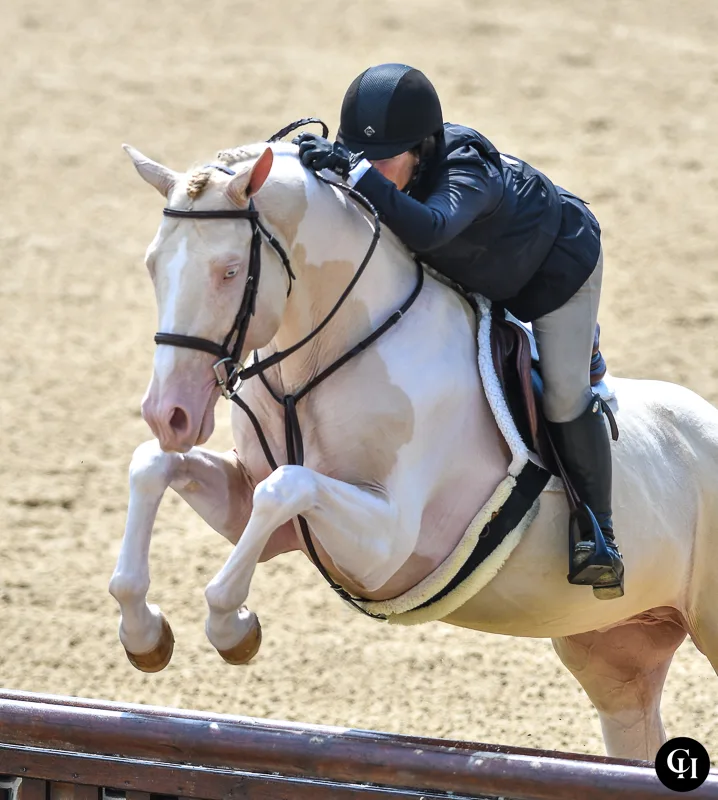
But he’s more than colorful; “Mikado” also has proven he’s got plenty of jump. Tania Mackee bred the 8-year-old stallion, registered with the Anglo European Studbook (GFS Lord Of The Dance—Charisma, Camaro), in England. He comes from a long line of colorful horses, including his palomino sire and buckskin overo dam. Erika Sergent and Danny Michan of Sergent Stables LLC imported him as a 3-year-old, and three years ago Michan started showing him in the jumpers but soon found Mikado wasn’t interested in going fast. In 2023, he started showing in the hunters with Isabella De Sousa before spending most of last year in the breeding shed.
Mikado showed a couple times during the Winter Equestrian Festival (Florida) with Brianne Goutal-Marteau, and in May, Sergent and Michan approached Bliss about developing him more as a hunter with the goal of eventually doing the derbies.
“He’s super brave. He’s a thousand percent brave, and he has a nice stride and nice scope, and I really think he can do it,” Bliss said. “He just has to get some more mileage.”
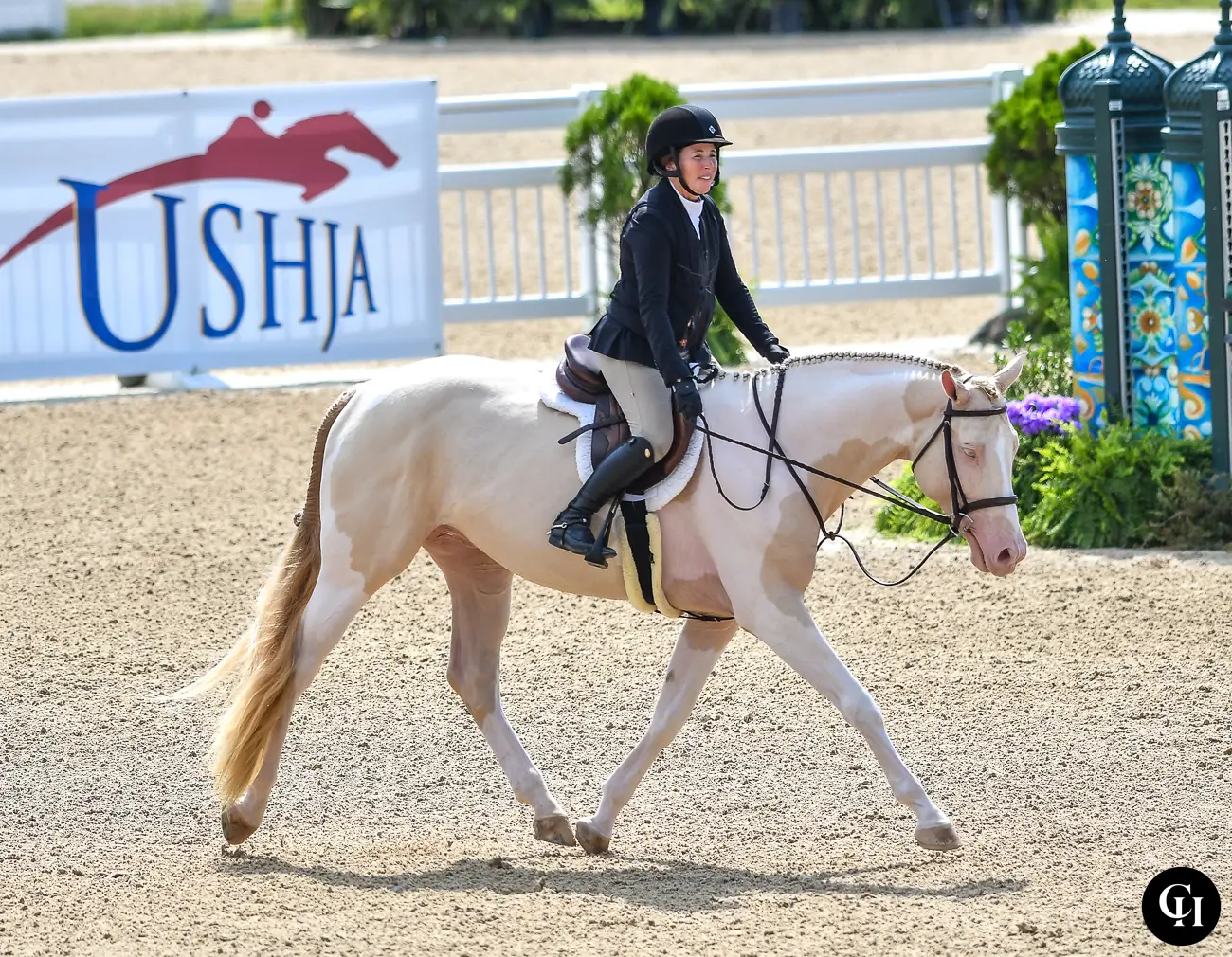
The green incentive championships is only Bliss’ fourth show with Mikado. She originally had no plans to bring him to Kentucky, but when he was so consistent showing in the national hunter derbies this summer at the World Equestrian Center—Ocala (Florida) she changed her mind.
“He’s light on experience, but he’s really brave and capable,” she said. “He’s really fun to ride. He just has to kind of learn the game a little. The jumps are easy for him; he was a little distracted at the end of the ring [in the Rolex Arena].
“He’s a little bit of a sleeper,” she added. “In the beginning, I was like, ‘This horse can do no wrong. He’s such an angel. He’s so perfect,’ and then he bucks me off one day. I was like, ‘I better not take that for granted. I better pay a little bit of attention here.’ But he’s a good boy. He’s great.“
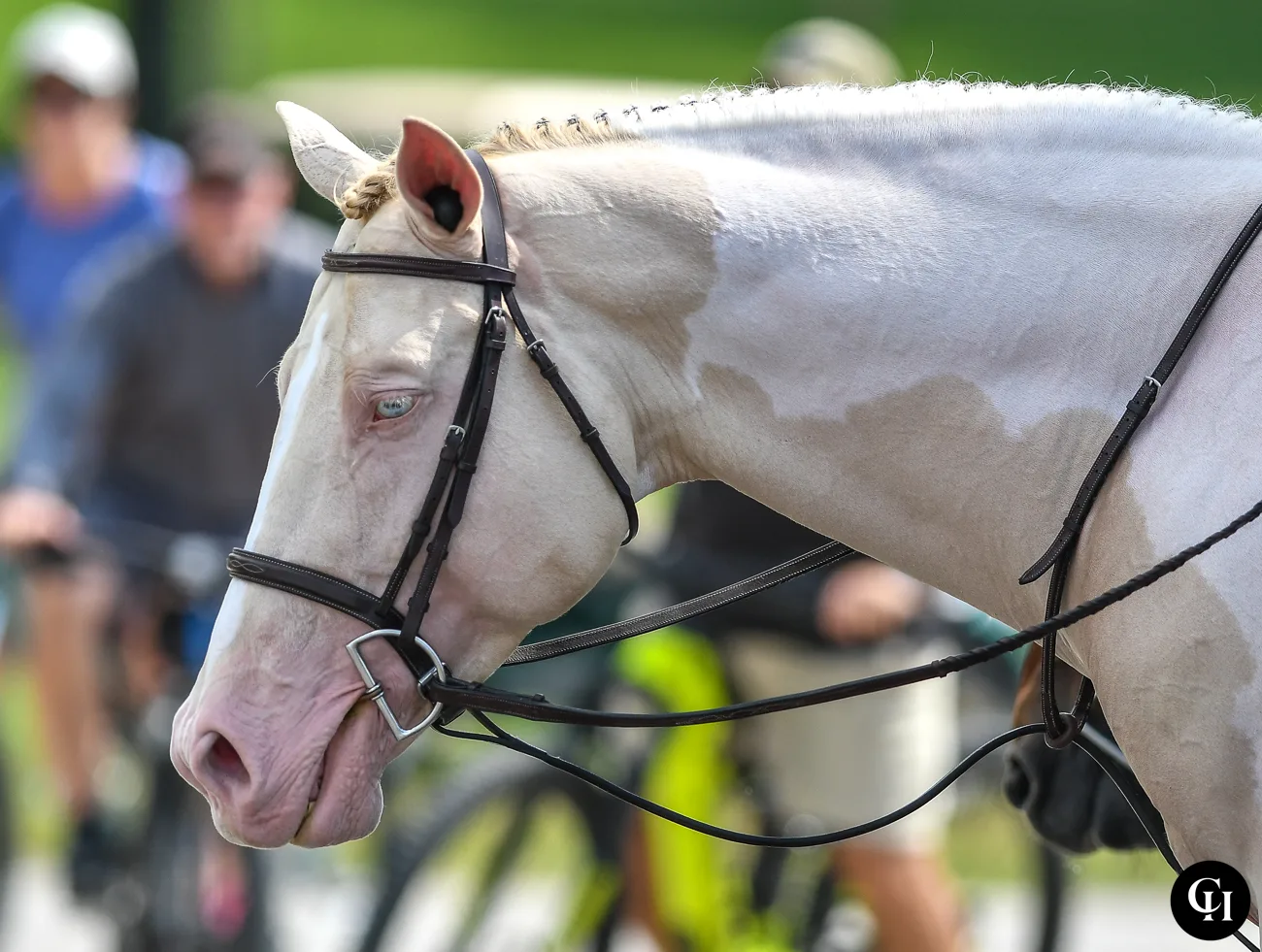
Bliss doesn’t have a lot of experience with stallions, but she said Mikado is very laid back. Though he goes to get collected regularly, he’s not reactive to mares. She said it is a new challenge figuring out his ideal ride and preparation.
“Having not had a ton of experience with stallions, it seems like a little bit of an extra challenge getting their minds and bodies both in sync at the same time,” she said. “Calm and focused in his mind but not too fatigued in his body.”
Be sure you’re following along with the Chronicle on Facebook and Instagram @Chronofhorse. You can also read full analysis of hunter championship week in the Sept. 26 issue of The Chronicle of the Horse magazine.
The post In A World Of Bays, GFS Mikado Steals The Spotlight appeared first on The Chronicle of the Horse.
]]>The post US-Bred Oslo MK Finds His Home In The Hunters At Green Hunter Incentive Championship appeared first on The Chronicle of the Horse.
]]>Last fall, young professional Elizabeth DeGolian received a Facebook message from her friend and fellow trainer Kristina Photakis with a proposition: Photakis and her business partner Matthew LeMaster had a young, green jumper who seemed like he might be a better fit for the hunters; would DeGolian be interested in selling him?
So DeGolian took a test ride on Oslo MK and found Photakis’ assessment of the gelding to be true; though he was quite wiggly, he was very easy to the jumps. She agreed to take him on and spent the next few shows putting some hunter miles on him, having no idea where it would lead her.

Photakis and LeMaster ended up owning “Oslo” when they purchased his dam Eloise Z (Epsom Gesmeray—LaBelle, Lux Z) for their breeding program at MK Sporthorses. Eloise Z was in foal at the time to Erco Van’t Roosakker (Darco—Babbe Van’t Roosakker, Kannan GFE), who is known for being a quiet stallion. The pair foaled out Oslo and raised him, hoping he would be sensible but have enough blood for the jumper ring.
“[He was] so sensible, great temperament [and] as a young horse real playful,” said LeMaster.
LeMaster showed Oslo last year over small fences and even competed him at the USHJA Young Jumper Championships (Michigan) in the 4-year-old division. But as they got to know him, it seemed clear Oslo’s metronome nature might be better suited to the hunters.
“He didn’t really have the drive to really go and really get to the jumps,” LeMaster said. “He just kind of wants to cruise around nice and easy, and that’s kind of his calm way of going.”
LeMaster rode him in one hunter show where he got good ribbons, and then they reached out to DeGolian about taking Oslo to sell.
“I’ve known Elizabeth for a long time, and she has started her business as a young professional and was kind of looking for some horses to develop, and I thought I’d like to give her a shot,” he said of the choice to send the gelding to DeGolian.
As Oslo started the winter circuit down in Ocala, Florida, DeGolian found she really jelled with the bay, and the trio found a perfect solution. At the time, DeGolian had a sales prospect she purchased for the hunter ring, but that mare showed aptitude for the jumpers. They traded, which put each horse in a program geared towards their nature. It was a decision DeGolian said she doesn’t regret.
“He’s like a golden retriever puppy,” she said. “He’s very, very, very sweet, but he’s funny. He’s kind of always got something in his mouth, like when I go to put his bridle on, I oftentimes have my riding gloves in my pockets, and he’ll grab them with his lips. We can’t turn him out in Velcro bell boots. We have to turn him out in pull-ons, because he will pull the Velcro bell boots off and toss them. He’s definitely not one you’d want to give a stall guard because he’d create havoc.”
Though they’ve dealt with the typical young horse challenges of wiggling and needing to build strength to carry himself softly in an open frame, DeGolian said Oslo has handled every challenge. She praised how Photakis and LeMaster developed him, saying his time spent in the jumpers has been beneficial to his hunter career.
“I think the one thing about developing the young hunters in the jumper ring is that it takes away a little bit of the pressure to be perfect,” she said. “I think that they did a good job teaching him that he just needed to go in and jump around the jumps, and that was all the expectation was, without too much extra pressure.”
Oslo has enthusiastically answered each new question presented to him, and after seeing how he marched around his first USHJA National Hunter Derby, she’s not concerned that he’ll be overwhelmed by the atmosphere in the Rolex Stadium as he contests the Platinum Performance USHJA 3’/3’3″ Green Hunter Incentive Championship this week. He jumped his first round today, with scores of 72, 77 and 81.

It is also DeGolian’s first time showing at the green incentive championship, and in addition to Oslo, she’s showing Inland Empire for Heather Tinney. She grew up showing in the hunters and jumpers and rode on the National Collegiate Equestrian Association team at the University of South Carolina from 2011 to 2015 before starting to work in the horse industry. But after getting burnt out, she went back to school to earn her master’s in counseling. While in school she did barn work on the side, and at graduation time, she realized she wasn’t ready to give horses up, so she continued to work at the barn while juggling a full case load as a therapist.
“At the end of the day, I’m glad I got a little more life perspective, but the horses is what I want to do,” she said.
“I do think school was a good thing in that I think that the horse world can get a little small and insular-feeling,” she added. “So it broadened my perspective, and it’s made it easier to come back and take things a little more with a grain of salt when you need to.”
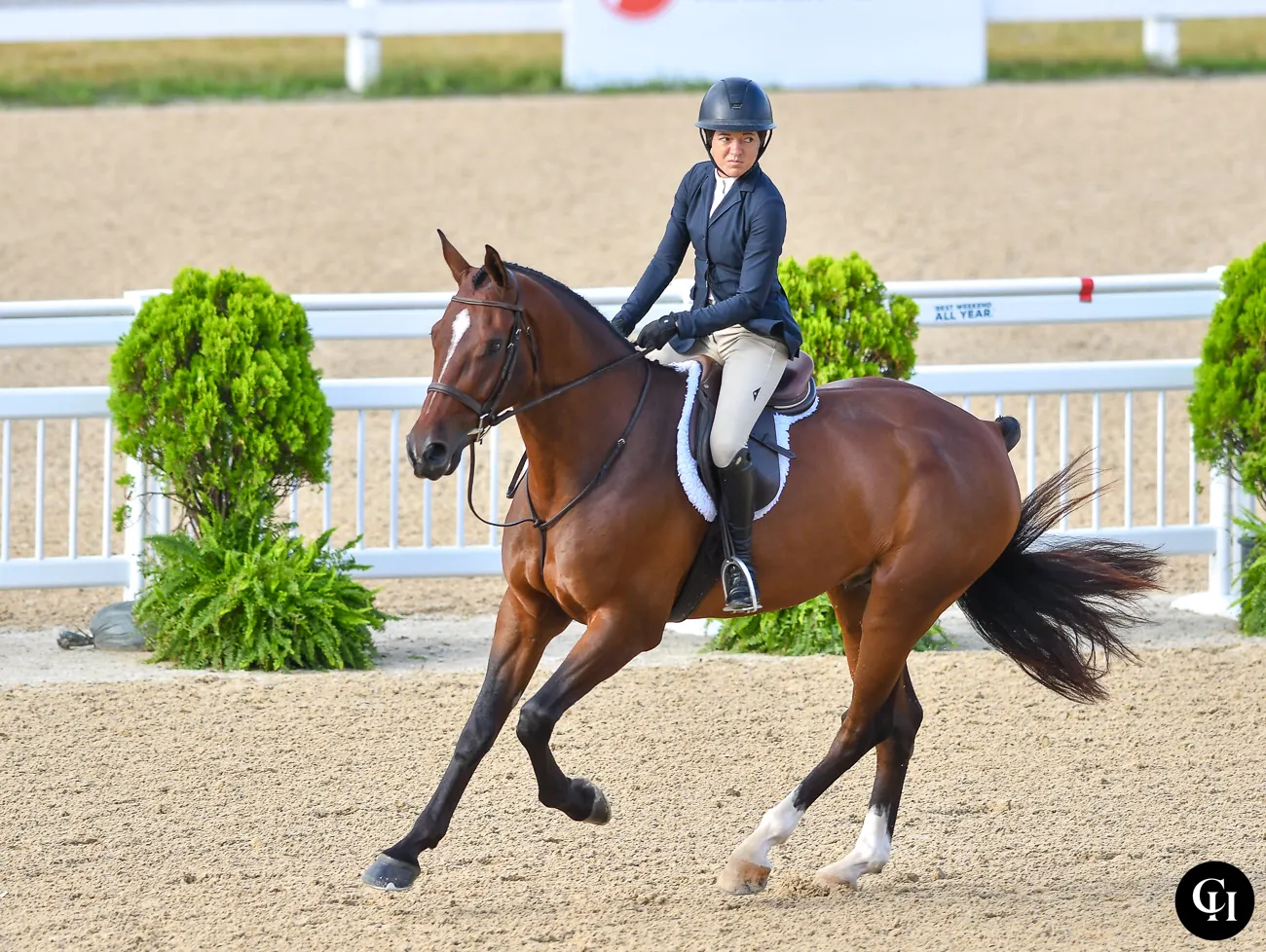
She now runs her business out of two farms near Alpharetta, Georgia, with a focus on developing young horses.
“I think [Oslo is] a good example of the fact that there are sport horses here being developed too that can compete with the European counterparts,” she said. “I would say I’ve got an equal mix in the barn right now, so I’m not anti-importing by any means, but it’s fun that the ones from here can kind of like hold their own too.”
Be sure you’re following along with the Chronicle on Facebook and Instagram @Chronofhorse. You can also read full analysis of hunter championship week in the Sept. 26 issue of The Chronicle of the Horse magazine.
The post US-Bred Oslo MK Finds His Home In The Hunters At Green Hunter Incentive Championship appeared first on The Chronicle of the Horse.
]]>The post Camp, Learn, Save: Returning To The Jumper Ring Thanks To A UDJC Show appeared first on The Chronicle of the Horse.
]]>Well, it turns out it’s a little harder than I thought to stay away from the sport that got me addicted to this lifelong horse habit in the first place. As time has passed, and I have moved out of school and into my career, now that I feel like I have a little more financial stability to spend money on extra things, I find myself absent-mindedly scrolling through lists of horse shows and horse trials in my area, thinking more and more about how it could be fun to go jump around somewhere other than my arena at home.
I board at a self-care facility and don’t have a trainer in Wisconsin, so I figured going to some sort of competition was a good way to check in and see whether the small amount of skill I have managed to acquire in my 31 years of life was being maintained to a reasonable, up-to-snuff standard—“snuff” in my mind meaning, “Can I jump around a three foot course without scaring anyone watching?”
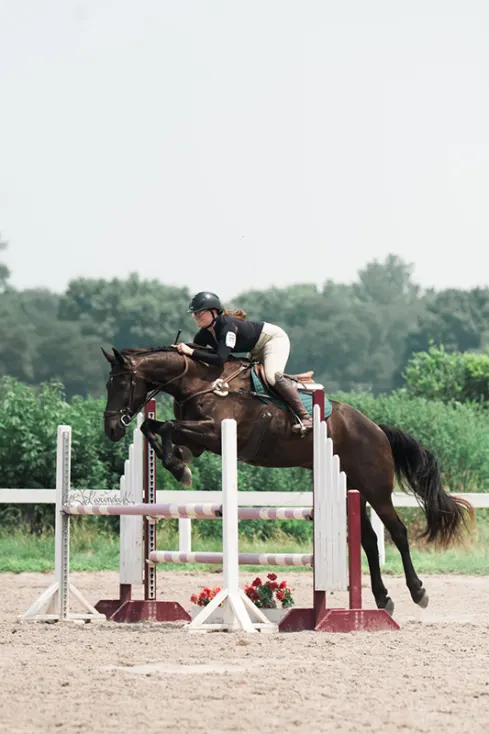
Around that time is also when I started seeing these funny little videos come up on my Facebook feed. You’ve probably seen them too: They feature German rider David Reichert speaking to the camera about a new show series he has created called UDJC, the United Dressage and Jumping Club. Two lines in the video caught my attention in particular; the first was a claim that UDJC “offers recognized horse shows, with double the fun at a fraction of the cost, in the disciplines of dressage and jumping.”
That got me curious for a couple reasons. First of all, I found it interesting that the shows featured dressage and jumping classes. I learned after speaking to David at the Aug. 2 horse show that he very intentionally set it up this way. When David was growing up learning to ride in Germany, he said it was expected that riders learned both dressage and jumping.
“All of us were expected to do both until we could ride around a third level dressage test and a [1.20-, 1.25-meter] jumping course,” David explained. “Then we would start to specialize in one of the other.”
When David moved to Texas in 2020, he was surprised how separate the two sports were kept in the United States, and he felt it was to the detriment of developing riders’ skills. Combine that with the eye-popping invoices he was seeing people pay to compete in American horse shows, and David decided he needed to do something about it.
So, in January, he produced the first UDJC horse show in Texas, complete with very entertaining promotional videos like those I saw on Facebook. (Fans of funny horse people on the internet will know The German Riding Instructor; he’s David’s friend and inspired many of the UDJC videos.)
I understood the concept for the show, but I did still wonder just how fractional the prices of these shows really were. I did a Google search for UDJC shows in my area and then pulled up an entry form on HorseSpot.net. Sure enough, it was indeed fractional: The trailer-in fee would be $30, each class would cost $35, with anywhere from $100 to $250 dollars in prize money awarded even in 0.65-meter classes. I could also choose between a 30-day trial membership for myself and my horse ($10 for the horse, $30 for me), or I could get a lifetime membership for my horse for $175, and an annual membership for myself at $90. So far so good. These are the kind of prices I am looking to pay for a horse show.
The second line in the video that I found interesting was David’s statement about how the jumper classes would be judged. He explained all classes under 1.0 meter would be judged for style not speed, “because no one should be racing through 70-centimeter courses with 14 jumps and two combinations against the clock.” The video explains riders are given a score, from 1-10, based on how well they rode the course, with 0.5 points deducted for each rail down.
I couldn’t agree more. We all know the scariest place at a horse show is the warm-up ring for the 0.85 class, and I have seen many a rider go into those classes and gallop around at breakneck speed, narrowly avoid flipping their horse over an oxer they left two strides too soon for, and be rewarded with a win if they managed to keep the fences up. I don’t want to fly around like a maniac, but when the fences are that low, if you are not willing to match these rider’s speed, you’re not competitive.
I’m glad some of the lower jumping classes at USEF-recognized shows have switched to an optimum-time format, because that definitely incentivizes better riding, but this UDJC concept of getting a score similar to an equitation class from a judge representing how well I rode the course was intriguing to me.
So I decided to take the leap and sign up for the nearest UDJC show to me, which was held at Oaklawn Farm in Wayne, Illinois, a few minutes down the road from HITS Chicago at the larger Lamplight Equestrian Center.
I still meant what I said a few years ago about wanting to continue trail riding and camping with my horse, so after looking up the address for the show, I started Googling to find the nearest campground that allowed horses. The answer was about 20 minutes away, at the Burnidge Forest Preserve. For $20 a night I could park my truck and trailer and camp with my horse. I had water, electric outlets, a fire pit, hitching posts, and nine miles of trails around the property to explore.
So, after working the full day the Friday before the show (all of the classes for the show were on Saturday and Sunday—bless up for the working amateur), I grabbed my dog and loaded the trailer at 6 p.m. to make the two-hour drive to the campground. I arrived a little after 8 p.m. and got my horse Moji set up in his spot; in an ideal world, I prefer to camp at sites with paddocks, but this one only had hitching posts where you could rig a tie line. Luckily Moji couldn’t care less, so I strung up the line, secured his rope halter to it with a safety knot, and he was good to go.
Let me say, I know what some of you may be thinking at this point: There is no way in hell my show jumper would tolerate camping overnight, tied to a line. I could have gotten a stall at the UDJC show for $100, but I both enjoy the camping experience and loved that this show gave me the ability to save money if I wanted to. With no requirement to stable on grounds, I could save money on both a hotel and a stall by camping.
This has always been my beef with horse shows: I can be frugal with where I keep my horse (self-care board), I can be frugal with how I take lessons and train my horse (haul in, look up exercises to do at home online), I can be frugal with where I sleep at night when I’m at a horse show (a mattress in the gooseneck trailer tack room). But I cannot do anything to lower the cost of entering a class, nor the cost of a membership fee, and many USEF-recognized shows either don’t allow haul-ins or charge so much for them that you may as well get a stall.
I have no problem with people wanting to horse show very differently than I do. You can get a stall and a grooming stall, stay in a nice hotel, board at a full-care facility, and pay a braider and a groom to get your horse ready, if you want. I have a problem with the cheapest option for a person willing to put in the work and do everything possible to make a show affordable still being a $1,000 horse show bill.
So here was an option that gave me that freedom—and turned a horse show weekend into a two-for-one camping trail ride. UDJC uses HorseSpot.net as its show software, and the start times for classes are updated throughout the day. So when my Sunday class wasn’t scheduled to start until noon, I slept in, made some coffee, moseyed around the campsite with my dog, and then, while still wearing my oversized T-shirt and pajama pants, tacked up Moji for a walk around the trails to stretch his legs. Sure beats sitting on a trunk in front of my stall waiting for my class to start! Around 11:20 a.m, I loaded him to make the 15-minute drive from the campground to the show.
The show itself served exactly the purpose I needed it to, which is to say it was both fun and made it very apparent what I needed to go home and work on. Back in 2019 Moji and showed in the 1.0- and 1.05-meter adult jumpers, but since we were out of practice, I decided to do the 0.75- and 0.85-meter classes on the first day of the UDJC show, and the 0.85 and 0.95 the second day. USEF ‘r’ hunter and hunter seat equitation judge Kathy Davidson was judging our classes, and along with assigning a style score, judges at UDJC shows give immediate feedback to riders after their rounds.
So for each of our classes, Moji and I would finish our round, make a circle, and then walk over to the judge’s booth to get a quick lesson on what we did right, and what we needed to work on. As someone who doesn’t have a trainer at home—or at the show with me—this was so helpful.
Kathy commented on Moji’s big stride and how I needed to package him together more as the course went on and not let him get so strung out. She also suggested I work at home on jumping from deeper distances, because she could tell we both preferred the long distances, but we needed to have both options in our toolbox.
I remember interviewing Anne Kursinski back in my days as a full-time Chronicle reporter, and her saying that a horse show is supposed to be the test you take after sitting at home and doing your homework for a few weeks or months. Are the things you’re working on paying off, how does your riding stack up against your peers, and can you apply everything you’ve worked on at home in a new environment with some pressure?
From that perspective, my UDJC experience was the perfect horse show. Not only is it testing what you’ve been working on at home, you get graded by the teacher in real time and told how you did, and how you can improve! Getting a ribbon for not dying in the 0.65 class you chipped and flew around isn’t really testing your skills or making you a better rider. Being judged on your style and skills and only rewarded when you ride in a way that is safe and effective and kind to your horse makes a lot of sense to me, and it makes doing well in a class feel a lot more rewarding. I love that there is a place I can go and compete and be rewarded for riding well at lower heights, and I only have to spend a couple hundred bucks to do so. (Exactly $220, if we want to be precise.)
I am totally stoked that David has started these shows, and I can’t wait to hit up the next one in Illinois.
Ann Glavan is an associate attorney with LawtonCates S.C. in Madison, Wisconsin. Before becoming an attorney, Ann spent four years working full time for The Chronicle of the Horse.
The post Camp, Learn, Save: Returning To The Jumper Ring Thanks To A UDJC Show appeared first on The Chronicle of the Horse.
]]>